
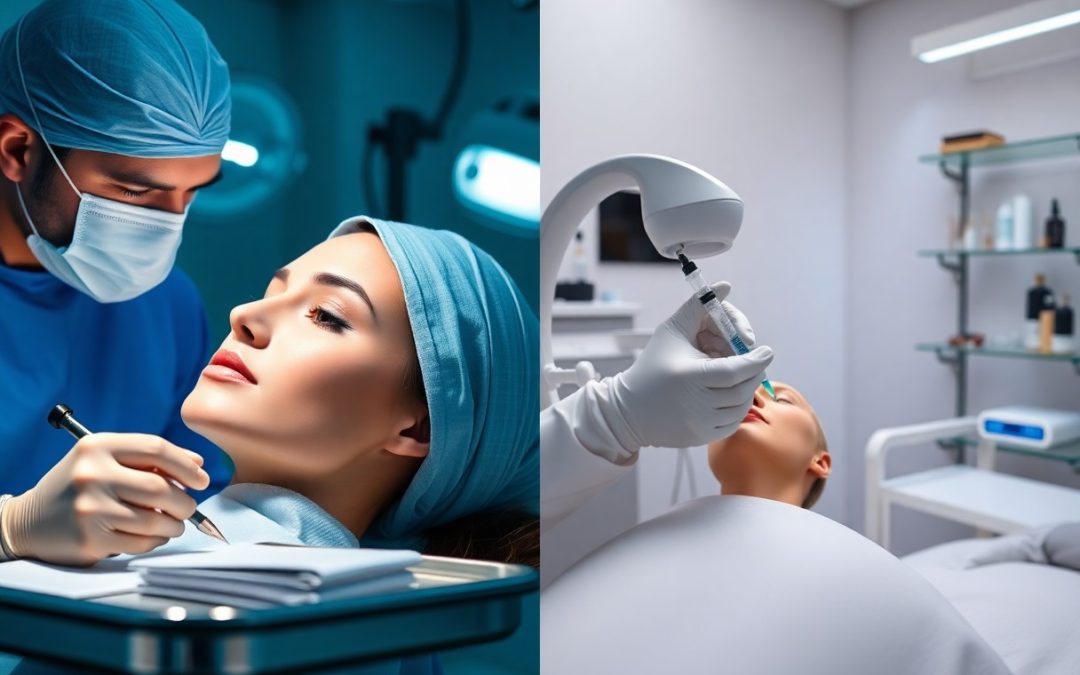
With your aesthetic goals in mind, combining cosmetic surgery and non-surgical treatments can deliver balanced, long-lasting results. Surgical procedures address structural changes, while non-invasive methods refine texture, volume, and tone. You can achieve a natural-looking enhancement by strategically using both approaches in your treatment plan.
The Limits of the Needle
You can only go so far with injectables. Fillers smooth lines and add volume, but they won’t tighten loose skin or reshape underlying structures. Botox softens dynamic wrinkles, yet it won’t correct deep folds or sagging tissue. Over-relying on needles may deliver temporary improvements, but lasting transformation often requires more. When aging progresses beyond what syringes can address, surgical intervention becomes the next logical step.
The Structural Necessity of the Blade
You may find that non-surgical treatments have limits when addressing deeper structural concerns. While fillers and lasers refine surfaces, only surgery can reshape underlying anatomy. You rely on the precision of the scalpel to correct excess skin, reposition fat, or redefine bone contours. This structural foundation then enhances the results of less invasive follow-up treatments. You create lasting change where creams and injections cannot reach.
Creating a Symbiotic Protocol
You achieve the most balanced results when surgical and non-surgical treatments work together. A facelift can restore structural support, while injectables refine texture and volume in specific areas. Your surgeon may recommend laser sessions post-operation to improve skin quality. Timing matters-staggering procedures allows healing while maintaining progress. This integrated plan enhances outcomes naturally, aligning with your anatomy and aesthetic goals.
Conclusion
Conclusively, you achieve balanced, natural-looking results when cosmetic surgery enhances non-surgical treatments. You extend the effects of injectables and skin therapies by combining them with surgical precision. This integrated approach addresses both surface concerns and deeper structural changes, giving you a refreshed appearance that aligns with your aesthetic goals.
Just as non-surgical treatments refine texture and tone, cosmetic surgery addresses deeper structural concerns. You can achieve balanced, long-lasting results by combining both approaches. Strategic use of fillers, lasers, or Botox alongside procedures like rhinoplasty or facelifts enhances overall facial harmony. You gain the benefits of immediate correction and gradual refinement.
The Limits of the Needle
You’ve likely noticed how quickly injectables deliver visible changes with minimal downtime. They smooth lines, restore lost volume, and refresh your appearance-often in under an hour. Yet, no matter how skilled the injector, needles can’t lift sagging skin, remove excess fat, or redefine underlying structure. There comes a point when non-surgical tools reach their ceiling.
Dermal Fillers and Volume
Dermal fillers restore youthful contours by replacing lost volume in areas like cheeks, temples, and under the eyes. You see immediate results that can last months, even years with certain products. But overfilling risks an unnatural appearance, and fillers won’t tighten loose skin or correct deep tissue descent.
The Point of Diminishing Returns
You may find that after several rounds of injectables, each new treatment delivers less noticeable improvement. The skin can only be stretched so far with filler before it looks swollen or stiff. At this stage, adding more product no longer enhances your look-it distracts from it.
When repeated injections yield subtler results, it’s not a flaw in technique-it’s physics. Soft tissues have limits in how much volume they can accommodate while maintaining natural movement and appearance. Pushing beyond this threshold often leads to distortion rather than refinement. This is where surgical intervention can offer a more balanced, long-term solution by addressing structural changes that fillers simply can’t correct.
The Structural Necessity of the Blade
Surgery provides what non-invasive methods cannot: structural change. When facial or body contours require repositioning, tightening, or reshaping at a foundational level, the precision of the scalpel becomes crucial. You may enhance volume with fillers or tighten skin with radiofrequency, but only surgery can permanently reconfigure underlying anatomy for lasting transformation.
Lifting Sagging Tissue
Gravity and aging loosen supportive tissues over time. You can temporarily lift with threads or energy-based devices, but only a surgical lift restores position and tension at the deep structural layer. This correction offers a more natural, youthful contour that non-surgical methods can’t sustain long-term.
Permanent Refinement
Rhinoplasty reshapes bone and cartilage to refine the nasal structure. You achieve subtle or dramatic changes that remain stable over time. Unlike injectables that dissolve, surgical refinement delivers enduring results aligned with your facial harmony.
When you choose rhinoplasty, you’re not just altering appearance-you’re adjusting the framework. Cartilage is sculpted, the nasal bridge refined, and tip definition enhanced with precision that injections can’t replicate. Healing takes time, but the outcome is a balanced, natural look that ages with you, requiring no maintenance to preserve its form.
Creating a Symbiotic Protocol
You achieve optimal aesthetic outcomes when surgical and non-surgical treatments work in harmony. A well-designed protocol integrates procedures like facelifts with follow-up injectables or skin resurfacing, ensuring natural, long-lasting results. Your surgeon tailors each step to complement healing and enhance overall facial balance.
Post-Operative Maintenance
Your recovery phase sets the foundation for lasting improvement. Non-invasive treatments such as radiofrequency therapy or gentle laser sessions can support healing, reduce swelling, and stimulate collagen once your surgeon clears you. These sessions help preserve surgical results while improving skin quality over time.
Enhancing Surgical Results
Your surgical outcome can be refined with strategic non-surgical interventions. Treatments like dermal fillers or neuromodulators address residual asymmetries or fine lines that surgery doesn’t target. This layering approach delivers a more polished, natural-looking appearance without additional downtime.
Refining your appearance after surgery often involves subtle adjustments that enhance proportion and smoothness. For example, after a rhinoplasty, a small amount of filler can correct minor irregularities, while Botox following a brow lift can prolong the lifted effect by reducing muscle pull. These precise interventions are timed to align with your healing, maximizing both safety and aesthetic refinement. Your provider will guide you on when and how to incorporate them for seamless improvement.
Summing up
So you see, cosmetic surgery can enhance and extend the results of non-surgical aesthetic treatments by addressing structural concerns that injectables or lasers alone cannot correct. When combined thoughtfully, these approaches offer you a more comprehensive solution, tailored to your unique anatomy and goals, delivering balanced, longer-lasting outcomes that reflect your desired appearance.