
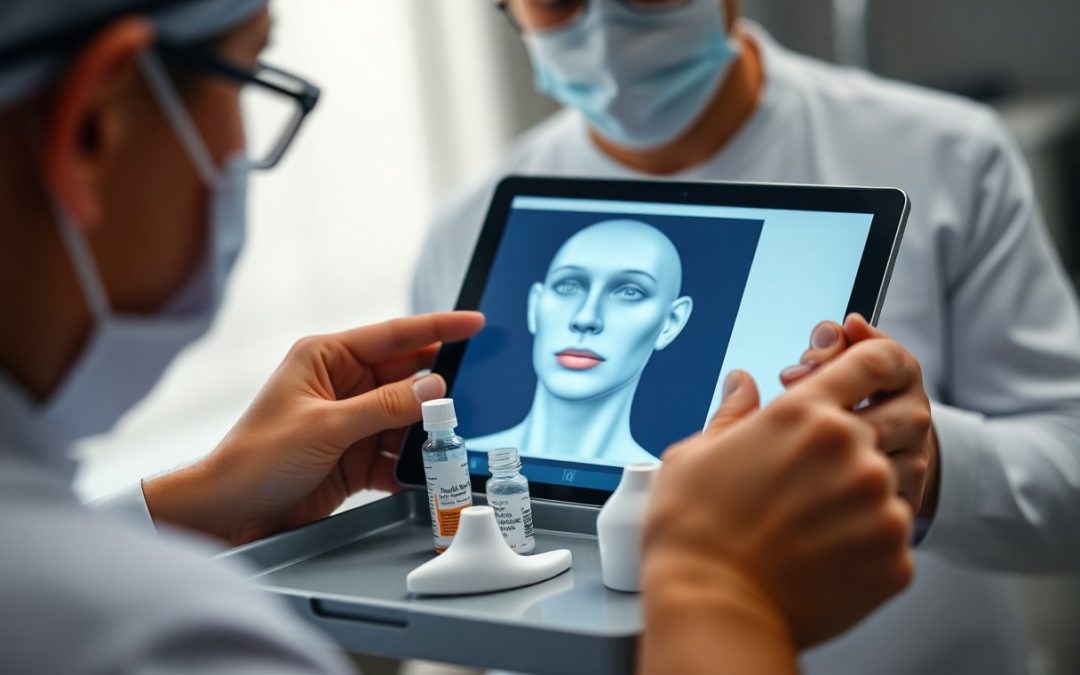
There’s a shift happening in cosmetic care that puts you at the center. Today’s treatments are no longer one-size-fits-all; advanced imaging, genetic insights, and personalized planning tailor every procedure to your unique anatomy and goals, delivering results that look natural and feel authentic.

The Departure from Universal Beauty Standards
Beauty no longer follows a single mold. You’re part of a shift where personal identity shapes aesthetic choices, not outdated ideals. Procedures now reflect your unique features, cultural background, and self-expression, moving beyond the narrow definitions of the past. Individuality is the new standard.
Deconstructing the One-Size-Fits-All Era
Mass-produced beauty ideals once dictated facial proportions and body shapes. You were expected to fit the mold, not the other way around. Today, those rigid templates are being dismantled. Your anatomy, lifestyle, and goals now guide treatment plans, replacing generic approaches with thoughtful, personal design.
The Rise of Individualized Morphology
Technology lets practitioners analyze your facial structure with precision. You benefit from 3D imaging and AI-driven simulations that map your bone structure, skin texture, and volume distribution. Treatments are calibrated to enhance your natural form, not alter it to match an external ideal. Your face remains unmistakably yours.
Customization goes beyond surface adjustments. Your facial asymmetries, once seen as flaws, are now understood as distinctive traits. Surgeons use morphological data to preserve your identity while achieving balance and harmony. This approach respects how aging, genetics, and expression shape your appearance, delivering results that feel authentic and naturally refined.
Digital Blueprints and the Precision Revolution
You now benefit from highly accurate digital simulations that guide every step of your cosmetic journey. These 3D models allow practitioners to plan interventions with unprecedented accuracy, ensuring results align closely with your expectations. Your unique facial or body structure shapes the blueprint, making each procedure truly individual.
Algorithmic Prediction of Aesthetic Outcomes
You can preview potential results before any procedure begins. Advanced algorithms analyze your facial structure and skin characteristics to project realistic post-treatment appearances. This predictive modeling helps refine goals and enhances confidence in your decisions, making the process more transparent and tailored to your vision.
High-Definition Mapping of Patient Anatomy
Your facial contours and tissue composition are captured in extraordinary detail using high-definition imaging. This precise anatomical map enables surgeons to anticipate how tissues respond during and after treatment. You receive a plan grounded in your actual physiology, reducing guesswork and improving safety and symmetry.
Using technologies like 3D surface imaging and AI-assisted segmentation, clinicians now identify subtle variations in your skin thickness, muscle placement, and bone structure. This level of detail allows for adjustments that respect your natural form while achieving desired enhancements. You’re no longer subject to generic templates-your treatment evolves from a data-rich understanding of your unique anatomy, ensuring outcomes that look balanced and authentic.
The Biological Pivot Toward Self-Derived Healing
Science now turns inward, using your body’s own resources to drive aesthetic improvement. Treatments once reliant on external substances are shifting toward self-sourced solutions, aligning with your biology for safer, more natural outcomes. This evolution reflects a deeper understanding of regeneration, where your cells become the architects of renewal. Any approach honoring this principle stands to deliver results that are not only effective but biologically harmonious.
Autologous Therapies and Cellular Sovereignty
You retain full ownership of your healing potential through autologous therapies. Using your own tissue-such as fat or blood-doctors minimize rejection risks and enhance compatibility. These methods respect your body’s innate intelligence. Any intervention that honors cellular sovereignty aligns more closely with your physiological truth.
- Your cells are harvested with minimal invasiveness
- Processed material is reintroduced to targeted areas
- Results reflect natural growth patterns
Harnessing Personal Growth Factors
Platelet-rich plasma (PRP) and conditioned serum therapies use your blood to isolate growth factors that stimulate collagen and tissue repair. Applied in facial rejuvenation or hair restoration, these concentrates amplify your body’s regenerative signals. Any treatment leveraging your unique biochemistry offers a tailored path to renewal.
- Blood is drawn and processed to concentrate healing proteins
- Growth factors are applied to areas needing regeneration
- Responses vary slightly, reflecting individual biology
The Social Psychology of the Unique Silhouette
You now seek forms that reflect individual identity rather than conform to outdated ideals. Personal silhouette preferences are shaped by cultural narratives, body image perceptions, and social validation, making customization not just physical but psychological. Procedures today respond to this shift, aligning aesthetic outcomes with how you see yourself in social contexts.
Shifting Paradigms of Natural Presentation
Your idea of natural beauty has evolved beyond symmetry and proportion alone. It now includes subtle imperfections and asymmetries that signal authenticity. Clinicians prioritize results that blend with your existing features, avoiding an over-refined look. This approach honors your uniqueness while enhancing confidence in everyday appearance.
The Influence of Digital Self-Curation
Your online presence shapes how you view your physical self. Filters, angles, and editing tools set new standards that influence real-world decisions. Cosmetic procedures are now designed to enhance how you appear in photos and video calls, aligning clinical outcomes with digital visibility and self-representation.
Digital self-curation has redefined aesthetic goals by making image control a daily practice. You’re no longer comparing yourself only to celebrities but to your own edited versions. This constant feedback loop drives demand for procedures that deliver consistency between filtered imagery and real-life appearance. Treatments now consider lighting, facial movement, and camera perspective as key outcome factors.
Technical Refinement in Minimally Invasive Artistry
You now benefit from techniques that blend precision with aesthetic intuition, where subtle enhancements reflect your unique facial architecture. Advanced tools and refined methods allow practitioners to work with greater control, minimizing downtime while maximizing natural-looking results tailored specifically to your anatomy and goals.
Micro-Dosing and Subtle Structural Shifts
Small volumes of injectables are strategically placed to reshape contours without altering your identity. You achieve balanced proportions through incremental changes, avoiding overcorrection. This method prioritizes harmony, enhancing your natural features with restraint and anatomical awareness.
Tailoring Injectables to Kinetic Movement
Your facial expressions guide where and how product is delivered. Injectables are placed to complement how your muscles move, preserving animation while softening lines. The result feels natural because it works with your expressions, not against them.
Dynamic facial movement varies from person to person-your smile may lift one side more than the other, or your brow may furrow in a distinct pattern. Practitioners now assess these kinetic signatures before injecting, adjusting depth, volume, and placement to maintain fluid motion. This personalized approach prevents stiffness, ensuring your expressions remain authentic even after treatment.
Navigating the Ethics of Bespoke Modification
You face real questions when personalization meets appearance. Tailored procedures offer precision, but they also raise concerns about societal pressures and self-perception. As technology enables deeper customization, you must weigh individual desires against broader implications. The line between enhancement and alteration grows thinner, demanding thoughtful reflection on what it means to change your body to match an ideal.
The Paradox of Choice in Cosmetic Design
Too many options can leave you uncertain, not empowered. When every facial feature can be reshaped to exact specifications, decision fatigue sets in. You’re told you can design your ideal look, yet endless tweaks may lead to dissatisfaction rather than confidence. The freedom to customize brings unexpected emotional weight.
Preserving Character Amidst Optimization
Your face carries history, emotion, and identity-elements no algorithm can fully grasp. As procedures aim for symmetry and proportion, there’s a risk of smoothing out what makes you recognizable to those who know you. The goal isn’t perfection, but refinement that honors your natural essence.
Modern techniques allow subtle adjustments that enhance without erasing. You might soften a prominent feature or restore volume lost with age, but the aim remains continuity with your past self. Skilled practitioners now prioritize facial harmony over trend-driven templates, using 3D imaging to simulate outcomes that feel authentic. This balance ensures your reflection still feels like home.
Summing up
Hence, you see a shift toward personalized care in cosmetic procedures, where treatments align closely with individual anatomy, goals, and expectations. Advanced imaging, genetic insights, and minimally invasive techniques allow practitioners to tailor outcomes with greater precision. Your experience is no longer one-size-fits-all but shaped by data, technology, and a deeper understanding of personal aesthetics.