
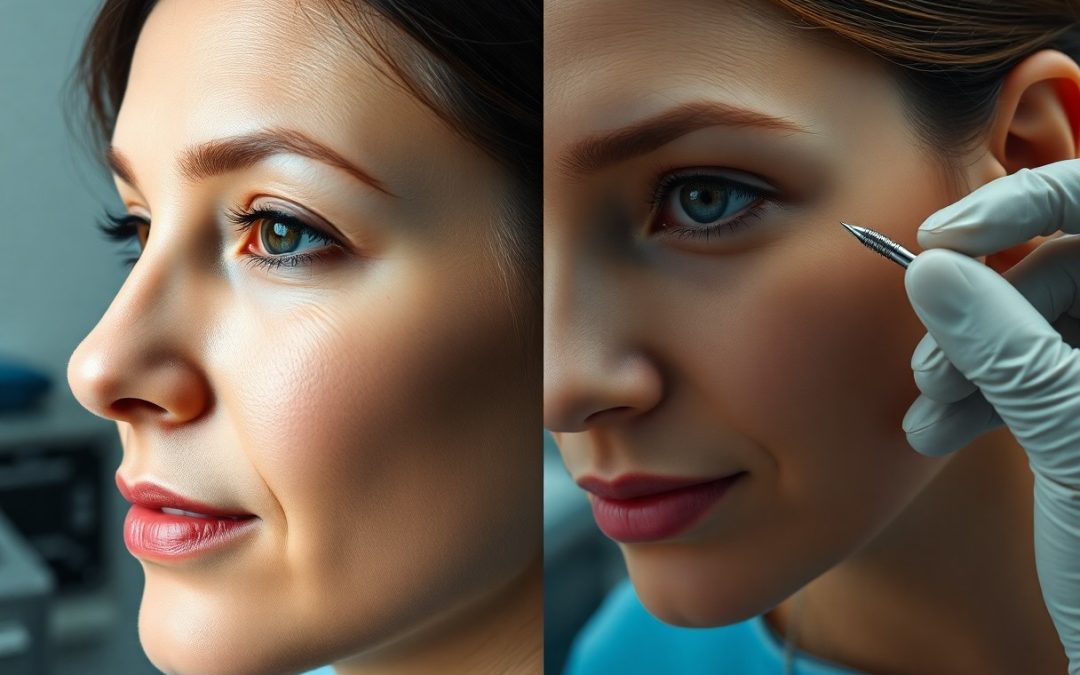
It’s not just about changing how you look-it’s about enhancing your features so subtly that your appearance remains unmistakably you. Skilled surgeons achieve natural-looking results by focusing on balance, proportion, and facial harmony, using techniques tailored to your unique anatomy. You benefit from their precision, experience, and artistic eye, ensuring outcomes that refresh without appearing altered.
The Geometry of Restraint
True artistry in aesthetic surgery reveals itself not in what is added, but in what is left untouched. You achieve balance by honoring the body’s natural proportions, avoiding overcorrection that disrupts harmony. Subtlety defines lasting results-measured decisions today prevent revisional challenges tomorrow.
Respecting Anatomical Landmarks
Your incisions follow the body’s natural creases and borders for a reason-these landmarks guide precision. Straying from them risks visible scarring or distorted contours. Skilled hands align every adjustment with these fixed points, preserving authenticity in movement and form.
The Principle of Negative Space
What you choose not to touch shapes the outcome as much as what you do. Negative space-the areas left intentionally unaltered-frames the result, allowing features to breathe. Overfilling or over-tightening erases this balance, leading to an artificial appearance.
Consider how shadows and contours define facial structure-these subtle voids are not empty but necessary. When you preserve negative space, you maintain natural transitions between regions, like the soft dip beneath the cheekbone or the gentle hollow near the temple. Altering these areas aggressively flattens dimension, sacrificing realism for temporary fullness. Mastery lies in restraint, letting untouched zones enhance rather than diminish the final effect.
The Mechanics of Tissue Manipulation
You feel the difference when tissue is handled with precision-experienced surgeons apply controlled pressure and use fine instruments to minimize trauma. Their technique preserves blood flow and reduces swelling, allowing for smoother healing. Every movement is intentional, designed to reshape without damaging the body’s natural architecture.
Sub-Surface Structural Integrity
Your body’s deeper layers provide the foundation for visible results. Skilled surgeons reinforce these structures without over-tightening, maintaining support while avoiding rigidity. This balance prevents unnatural contours and ensures facial expressions remain fluid and authentic over time.
Mimicking Natural Tension
Your skin moves in harmony with underlying muscles, and the best outcomes replicate this dynamic. Surgeons who master natural tension anchor tissues at angles that mirror your original anatomy, preventing the “pulled” look that betrays surgical intervention.
Think about how your face shifts when you smile-there’s a subtle, multidirectional pull that flat lifting can’t replicate. Surgeons who excel in mimicking natural tension study these movement patterns, adjusting sutures along diagonal and horizontal vectors. This approach preserves animation, so your expressions stay genuine, not frozen or over-tightened. It’s not about lifting more-it’s about lifting smarter, in alignment with how your face was designed to move.
The Psychology of the Unseen
People respond to subtle cues in facial expression and structure without realizing it. Skilled surgeons shape outcomes that feel familiar and authentic by honoring these invisible signals. Your face carries a personal history-altering it without regard for those quiet details risks creating something technically correct but emotionally disconnected.
Preserving Unique Patient Markers
Every face holds distinguishing traits-a slight asymmetry, a unique hairline, the curve of a brow. You keep these markers because they anchor identity. Removing them can make even a well-executed result look foreign. The best outcomes enhance, not erase, the features that make you recognizable to those who know you.
Avoiding the Trap of Uniformity
You’ve likely seen results that look polished but indistinct-like they came from the same mold. This happens when surgeons prioritize trends over individuality. True artistry means resisting the urge to impose a standard ideal. Beauty emerges from variation, not replication.
Uniformity creeps in when aesthetic templates override personal anatomy. Some surgeons default to popular proportions or shapes, applying them across patients regardless of facial harmony. You benefit most when your structure, skin quality, and expression patterns guide the approach. A nose that fits your cheekbones and complements your smile will always look more natural than one copied from a magazine.
Precision Through Specialized Instrumentation
Skilled surgeons achieve natural-looking results by using instruments designed for specific procedures and tissue types. These tools allow you to work with greater accuracy, minimizing trauma and supporting refined outcomes. The right instrumentation isn’t just about preference-it directly influences the quality of healing and final appearance.
Tailoring Tools to Texture
You match each instrument to the unique density and elasticity of the tissue you’re reshaping. Fine-tuned forceps, micro-scissors, or blunt dissectors help preserve delicate structures while achieving clean, intentional changes. This attention to texture ensures subtle, lifelike contours without overcorrection.
Enhancing Tactile Feedback
Your fingertips guide precision when instruments transmit subtle resistance and tissue variation. Tools with balanced weight and textured grips reduce slippage, letting you feel minute differences in structure. This direct sensory connection supports refined decisions during critical moments of dissection or placement.
When you rely on tactile feedback, every movement becomes more intentional. Instruments crafted with minimal vibration and optimal tip rigidity allow you to detect layers beneath the surface-like distinguishing between fibrous scar tissue and healthy dermis. This sensitivity prevents unintended damage and supports smoother, more predictable healing that looks and feels natural.
The Strategic Placement of Incisions
Every incision tells a story, and skilled surgeons ensure it’s one of subtlety. You benefit from their precision when cuts follow your body’s natural contours, minimizing visible scarring. Placement isn’t random-it’s calculated to align with how your skin moves and stretches, making the difference between obvious surgery and undetectable refinement.
Hiding Evidence in Natural Folds
Smart surgeons use your anatomy to conceal incisions where folds already exist. You’ll find these lines along the hairline, under the chin, or within creases near joints-spots where scars naturally disappear. This technique ensures healing happens out of sight, preserving the illusion of untouched skin.
Managing Light and Shadow
Subtle shifts in contour affect how light plays across your face or body. You want smooth transitions, not abrupt edges that cast unnatural shadows. Surgeons skilled in aesthetics shape tissue to reflect light the way nature intended, so results blend seamlessly with your existing form.
Light doesn’t just reveal shape-it exposes imperfection. When tissue is lifted or repositioned, even a millimeter of unevenness can create a shadow that draws the eye. You avoid this by working with a surgeon who thinks like a sculptor, refining angles and curves so light flows uninterrupted. This attention to dimension ensures your results look natural from every angle, not just in the mirror at home. It’s not about dramatic change-it’s about believable change.
The Long-Term Trajectory of Healing
Healing doesn’t end when the incisions close. Your body continues to adjust for months, even years, after surgery. Skilled surgeons anticipate this biological timeline, shaping results that mature gracefully as swelling fades and tissues settle into their final form.
Predicting Biological Evolution
Change is built into your anatomy. A refined surgeon accounts for how your skin retracts, how fat redistributes, and how scars soften over time. You’re not just treated for today-you’re guided toward a future where your results look increasingly natural.
Ensuring Timeless Proportions
Beauty shifts with trends, but balance endures. Your facial or body contours are planned with proportions that resist aging and fashion cycles. The goal isn’t to look “done”-it’s to look like the best version of you, now and decades from now.
Timeless proportions rely on anatomical harmony, not arbitrary ideals. Your surgeon measures relationships between features-how the jawline supports the chin, how breast width aligns with torso height. These ratios remain visually pleasing as you age, avoiding the dated look of overcorrection or fleeting fads. Subtlety, not spectacle, defines lasting success.
Summing up
Following this, skilled surgeons achieve natural-looking results by prioritizing subtle refinements over dramatic changes. You benefit from their precision, attention to facial harmony, and deep understanding of anatomy. They tailor each procedure to match your unique features, ensuring outcomes blend seamlessly with your appearance, never appearing overdone or artificial.