

Consultation is your first step toward enhancing your appearance and achieving your aesthetic goals. During this pivotal meeting, you will discuss your desires, medical history, and any concerns you may have with a qualified surgeon. You will also be informed about the various procedures available, their risks, and expected outcomes. This is your opportunity to ask questions, gain clarity, and establish a rapport with your surgeon, ensuring you feel comfortable and confident in your decision moving forward.
Understanding Cosmetic Surgery
To fully appreciate cosmetic surgery, it’s important for you to understand its purpose and scope. Cosmetic surgery aims to enhance your appearance by addressing aesthetic concerns or issues you may have with your body. From facelifts to liposuction, these procedures can boost your self-confidence and help you achieve the look you desire.
Overview of Procedures
At your consultation, you will learn about various cosmetic surgery procedures available to you. Each procedure is designed to target specific areas of your body, allowing for a personalized approach to your aesthetic goals. Common options include breast augmentation, rhinoplasty, and tummy tucks, among others.
Common Reasons for Seeking Surgery
Above all, understanding why people choose cosmetic surgery can help you reflect on your own motivations. Many individuals seek these procedures for reasons ranging from improving self-esteem to correcting perceived physical imperfections.
And as you probe deeper into the motivations for surgery, you may discover that common reasons include restoring youthfulness, enhancing certain features, or even recovering from significant weight loss. Individuals often find that these procedures not only improve their physical appearance but also positively affect their emotional well-being, providing you with lasting confidence and satisfaction in your appearance.
Preparing for Your Consultation
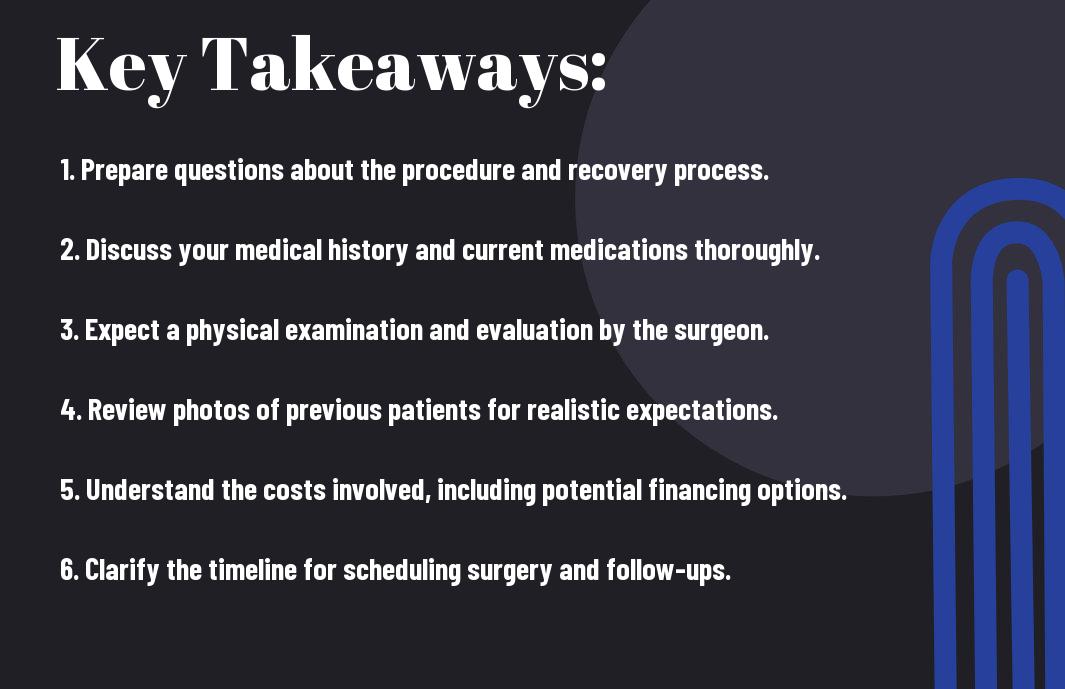
It’s important to approach your cosmetic surgery consultation well-prepared to ensure a productive discussion. Start by setting clear expectations and outlining your goals for the surgery. Gather your medical history, outlining any medications or previous procedures. You may also want to consider the timeline for your surgery and recovery, as these factors can significantly impact your decision-making process.
Researching Surgeons
Researching your prospective surgeons is vital to ensure you select someone qualified and reputable. Look for board-certified professionals with extensive experience in the specific procedure you are considering. Read reviews, check before-and-after photos, and verify credentials to gauge their expertise and patient satisfaction.
Questions to Prepare
Surgeons appreciate when you come prepared with questions about your procedure, as it shows your commitment to understanding the process. This preparation will help clarify any uncertainties you have regarding the surgery and recovery. Consider asking about the surgeon’s experience, potential risks, and what the recovery process typically looks like. You may also want to inquire about financing options and follow-up care to get a comprehensive understanding of what to anticipate.
What to Expect During the Consultation
Many patients feel a mix of excitement and nervousness before their first consultation. This appointment is imperative in establishing a rapport with your surgeon and understanding the procedure you are considering. You will find that your surgeon will take the time to listen to your concerns, explain the process, and outline what you can expect moving forward. This initial meeting is about gathering information and ensuring that you feel comfortable and well-informed about your choices.
Initial Assessment
Beside discussing your medical history and any previous surgeries, your surgeon will conduct a preliminary evaluation of your overall health. They may review photographs and measurements relevant to the procedure you desire. This assessment helps establish a baseline for what is possible and relevant to your body type.
Discussion of Goals and Expectations
At this stage, it’s imperative to articulate your goals and expectations clearly. Your surgeon will want to know what changes you hope to see and how you envision your ideal outcome, as this information drives the discussion forward.
But it’s equally important for your surgeon to provide realistic expectations based on your anatomy and capabilities of the procedure. They will guide you on what can realistically be achieved and what might be beyond your goals. This transparent dialogue helps build trust and ensures you leave the consultation feeling confident in your decisions moving forward.
The Role of the Surgeon
Once again, it is vital to recognize that your surgeon plays a pivotal role in your cosmetic surgery journey. They will guide you through the entire process, addressing your concerns, outlining potential risks, and discussing the expected outcomes of your procedure. Establishing a strong rapport with your surgeon can greatly enhance your experience and ensure that your expectations align with their expertise.
Credentials and Experience
Behind every successful cosmetic procedure lies the surgeon’s credentials and experience. Look for board certification, specialized training, and a wealth of practice that demonstrate their competence in performing your desired surgery. Inquire about their previous cases and ask to see before-and-after photos to assess their aesthetic style and skill level.
Communication and Trust
Beside credentials, fostering open communication and trust with your surgeon is key. You should feel comfortable asking questions and expressing any concerns about the procedure. A good surgeon will take the time to listen and provide clear, honest answers that help alleviate your fears and clarify your goals.
Hence, establishing effective communication with your surgeon allows you to create a collaborative relationship. When you trust your surgeon, you are more likely to feel relaxed and confident leading up to your procedure. Make sure you feel understood and valued throughout the consultation, as this connection is vital for a successful outcome both physically and emotionally.

Post-Consultation Steps
Your journey doesn’t end with the consultation. After your appointment, it’s necessary to carefully consider the information and recommendations provided by your surgeon. Reflect on any questions or concerns that arise, as seeking clarification can help you make an informed decision about your cosmetic surgery options.
Evaluating Your Options
With a thorough understanding of your desired outcome and the potential procedures available, you can begin evaluating your options. Consider factors such as recovery time, costs, and possible risks associated with each procedure. This evaluation will help you feel more confident in your decision-making process.
Scheduling the Procedure
Above all, once you have selected a procedure that resonates with you, the next step is to schedule your surgery. This is an exciting moment, as it brings you closer to achieving your aesthetic goals.
Hence, your surgeon’s office will guide you through the scheduling process, taking into account your availability and any pre-operative requirements. It’s important to clarify any final questions you have about the procedure and to discuss post-operative care plans. Properly preparing for your surgery date will help ensure a smooth experience, allowing you to focus on your journey toward transformation.
Addressing Concerns and Risks
Despite the excitement that comes with planning your cosmetic surgery, it’s vital to address any concerns and risks associated with the procedure. Your consultation is the perfect opportunity to discuss these fears openly with your surgeon, who can provide clarity and information to help you make informed decisions. Understanding potential risks aids in forming realistic expectations and prepares you for the journey ahead.
Potential Complications
The potential complications of cosmetic surgery can include infection, scarring, and anesthesia-related issues. Although these risks are generally minimal, it is vital for you to have a comprehensive understanding of what could go wrong and how these complications might affect your results. Your surgeon will discuss the likelihood of any complications specific to your procedure, allowing you to weigh the benefits against the risks.
Recovery Process
Along with addressing concerns, gaining insights into the recovery process is vital for your planning. Healing times vary based on the procedure, and it is vital for you to understand what to expect post-surgery, including any physical limitations or follow-up appointments. Familiarizing yourself with the recovery process can help you mentally prepare for the changes in your routine.
This overview of the recovery process will include information about potential discomfort, swelling, and necessary care steps you will need to follow after surgery. You might be advised to take time off work, restrict certain activities, and follow specific post-operative care instructions to ensure optimal healing. Discussing these aspects during your consultation empowers you to create a recovery plan that aligns with your lifestyle and goals.
Conclusion
Taking this into account, your first cosmetic surgery consultation is a significant step towards achieving your aesthetic goals. You’ll discuss your desires and expectations, undergo a thorough evaluation, and explore options tailored to your needs. Be prepared to ask questions and express any concerns to ensure you feel confident in your choices. Ultimately, this appointment lays the foundation for a successful surgery and helps you establish a trusting relationship with your surgeon.