
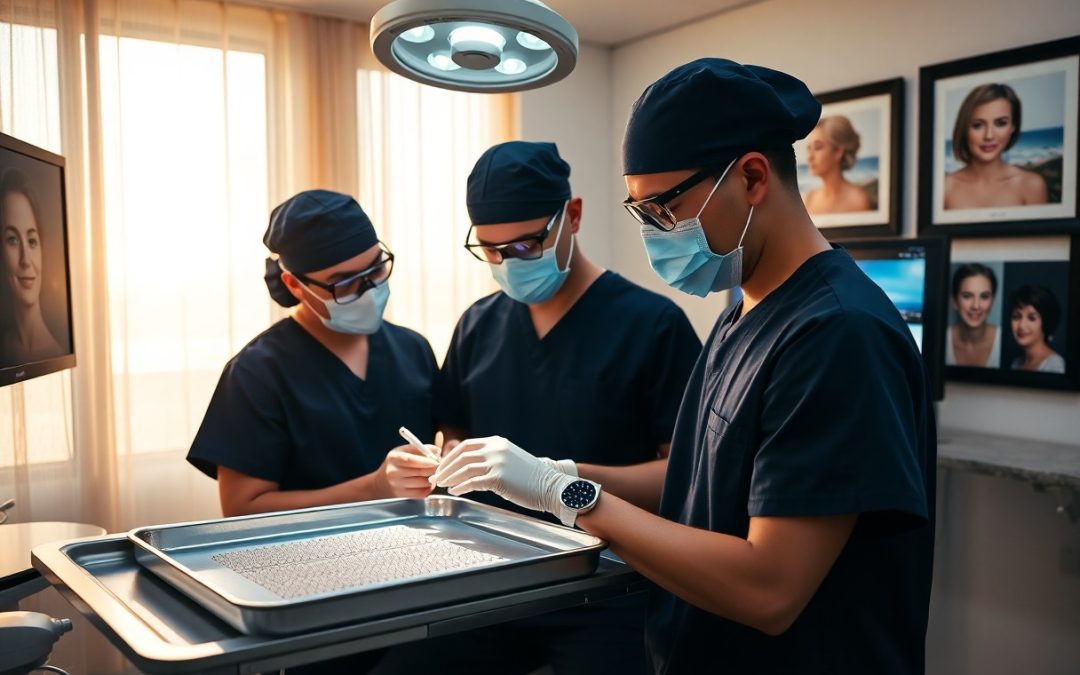
Elite cosmetic surgeons in Orange County combine meticulous anatomical knowledge, artistic proportion, and advanced, minimally invasive techniques to produce timeless, ethereal results that enhance your natural features. They prioritize personalized consultation, evidence-based procedures, and refined post-operative care so you achieve subtle, enduring improvement with safety, harmony, and measured expectations.
The Philosophy of Timeless, Ethereal Aesthetics
Defining “timeless” and “ethereal” in facial and body aesthetics
You judge timeless results by proportions that withstand changing fashion: the facial thirds (hairline to glabella, glabella to subnasale, subnasale to menton) remaining near-equal, and relationships that echo the Golden Ratio (≈1.618) in features such as philtrum length to upper lip and chin projection. Practically speaking, classic measures-nasolabial angle around 95-110° for women and 90-95° for men, and a waist-to-hip ratio near 0.70 for feminine contours-serve as objective anchors when you plan revisions or augmentations that will look natural for decades.
You also use “ethereal” to mean lightness of transition and preservation of movement: soft melding of cheek to temple, subtle tear-through rejuvenation, or a jawline that appears defined without stiffness. In procedures this translates into millimeter-scale decisions-1-3 mm dorsal adjustments in rhinoplasty, 0.5-1.5 mL per lip syringe for graduated volume, and deep-plane maneuvers that maintain dynamic expression-so the outcome reads as both refined and alive rather than fixed or trend-led.
Balancing cultural trends with enduring proportions
You navigate between bold, time-limited trends and proportions that age well by quantifying desired changes and staging interventions. For example, if fuller lips are requested, you’ll often start with 0.5-1.0 mL of hyaluronic acid and photograph serial progress rather than immediately performing larger, irreversible augmentations; HA fillers typically persist 6-18 months, allowing adjustment as facial support and fashion evolve. Likewise, when addressing cheek fullness, you weigh temporary filler volumes (commonly 1-3 mL per side) against structural options like fat grafting or implants, which offer longer-term projection but different risk profiles.
You also rely on objective planning tools-3D imaging, standardized frontal and profile ratios, and dynamic video-to translate trend preferences into proportionate outcomes. Surgeons in Orange County frequently document pre- and post-simulations that let you see how a 2-4 mm change in chin projection or a 10-20° alteration in nasal rotation will affect overall harmony before any permanent step is taken.
More specifically, cultural nuance guides technical choices: patients from East Asian backgrounds may prefer subtle dorsal augmentation and smoother transitions, so you’ll favor micro-augmentation and tip refinement over aggressive reduction; patients seeking Westernized contours often want stronger projection and defined tip rotation, which you achieve with conservative grafting and scaffold techniques. Applying measurable targets-Golden Ratio relationships, nasolabial angles, and a 0.70 WHR baseline-lets you honor current preferences while preserving proportionate, long-lasting results.
Patient Evaluation and Personalized Planning
Comprehensive anatomical and aesthetic analysis
Surgeons begin by quantifying your anatomy: measurements such as MRD1 (margin reflex distance 1) in mm for eyelid cases, palpebral fissure height, nasolabial and nasofrontal angles, and skin thickness categories (thin <4 mm, medium 4-6 mm, thick >6 mm for nasal skin) guide technique selection. Facial thirds, chin projection, and occlusal relationships are recorded; imaging modalities like 3D surface photography (e.g., Vectra) and, when indicated, low-dose CT help you and the surgeon visualize skeletal versus soft-tissue contributors to disharmony. Prior scars, cartilage quality, and tissue laxity are documented with simple clinical tests – pinch and stretch for skin elasticity, pinch-test for nasal soft tissue – so plan adjustments reflect measurable constraints rather than intuition alone.
From those data the team builds a procedural map: precise graft or filler volumes (facial fat grafting commonly ranges 5-30 mL per session; hyaluronic acid filler doses often fall between 0.5-4 mL per treated area), intended incision lines, and anticipated changes in angles or projection (for example, targeting a nasolabial angle shift into the 90-110° range for many female patients). You’ll see staged options when combined procedures would exceed safe operative times (many practices limit elective cases to under ~6 hours per session) or when medical factors – active smoking or a BMI over ~35 – require optimization first. This objective planning reduces surprises and sets clear milestones for healing and reassessment.
Psychological screening and expectation management
Expect structured psychosocial screening as part of the evaluation: brief instruments such as the PHQ-9 and GAD-7 are commonly used (a PHQ-9 score ≥10 indicates moderate depression), and targeted screening for body dysmorphic disorder (BDD) with tools like the BDDQ helps identify patients who may need referral. You’ll be asked about motivations, history of psychiatric care, and prior cosmetic revisions – multiple prior unsuccessful surgeries or a fixation on a minor flaw often prompts a deeper psychiatric consult. Prevalence studies in cosmetic populations report BDD rates in the 7-15% range, so an evidence-based screening workflow protects both you and the surgical team.
When expectations are realistic and modifiable, your surgeon uses visual aids – 3D simulation, morphing, and comparison photos from similar cases – to translate goals into measurable outcomes and timelines (expect initial soft-tissue settling at 6-12 weeks, with final contour and scar maturation typically taking 6-12 months). You’ll be given concrete examples of likely versus unlikely results, and surgeons will outline contingency plans, including revision thresholds and objective criteria for when a secondary procedure might be recommended.
More intensive management happens if screening raises red flags: you may receive a formal psychiatric referral, a requirement for stabilized mood disorder treatment, or a decision to delay or decline surgery. In practice, many practices document a standardized consent process plus a cooling-off period of 2-12 weeks for high-stakes requests; during that time you’ll review photographs, written risks, and alternative, non-surgical options so that informed consent is backed by clinical judgment and documented mental-health clearance when indicated.
Surgical Techniques and Artistic Principles
You notice the difference when technical planning aligns with an artistic eye: elite surgeons map bony frameworks, soft-tissue volumes, skin quality, and vectors of pull before making a single incision. Advanced preoperative tools-3D CT or stereophotogrammetry and virtual surgical planning-let you preview changes to bone and soft tissue, quantify volumetric goals, and reduce intraoperative guesswork.
Many top surgeons combine structural maneuvers with staged soft-tissue work to preserve natural dynamics; for example, a staged approach that places definitive bone or cartilage grafts first and then performs fat grafting 3-6 months later often yields more predictable contours and longer-lasting results.
Structural reshaping: bone, cartilage, and deep support
You benefit from procedures that address the skeleton because bone and cartilage define long-term shape. In rhinoplasty and midface reconstruction, septal, auricular, or costal cartilage grafts provide predictable tip projection and dorsal support, while osteotomies, mandibular contouring, and malar osteoplasty change facial proportions at their source. Surgeons routinely use titanium fixation or resorbable plates for stable osteotomies and employ CAD/CAM cutting guides when precision within millimeters matters.
Deep-support work also includes SMAS and deep-plane strategies in facelifting: by repositioning and fixating the deeper fascial layer rather than just redraping skin, you get durable lift with less tension on the epidermis. Clinical series commonly report functional and aesthetic longevity of facelifts in the range of 7-10 years when the deep tissues are addressed and fat compartments are preserved rather than over‑resected.
Soft-tissue finesse: fat grafting, micro-contouring, scar-minimizing methods
You’ll see fat grafting used both as a volumizer and a contouring tool; typical facial sessions deliver 10-50 mL total depending on the regions treated, with retention rates commonly cited in the 40-60% range. Surgeons process and place fat as micro- or structural grafts-distributing small parcels to maximize surface contact and vascular ingrowth-then reassess after 3-6 months and stage additional grafting if needed to refine form.
Micro-contouring with fine cannulas, power-assisted liposuction, or targeted subcutaneous release sculpts transition zones so your results look seamless; combining autologous fat with limited dermal work preserves softness. Incision planning in natural creases, multilayer closure with buried sutures, and early silicone therapy reduce scar prominence, while steroid injections for hypertrophic response and fractional laser resurfacing at 3-6 months offer predictable scar remodeling when indicated.
For practical planning, you should expect staged treatment: many surgeons schedule a secondary fat‑grafting session about 3-6 months after the initial procedure to address resorption and fine-tune contours, use 3D photography to measure volumetric change objectively, and reserve lasers or microneedling for scar texture improvement once the incision has fully matured-typically after 3 months.
Innovations, Technology, and Minimally Invasive Options
Role of imaging, simulation, and precision instrumentation
You rely on advanced 3D imaging and simulation (Canfield/Vectra-style systems and virtual surgical planning) to quantify asymmetry, plan volumetric changes, and set measurable goals-most platforms report point-to-point accuracy within roughly 1-3 mm, which translates into predictable intraoperative decisions for rhinoplasty, facial fat grafting, and breast augmentation. When your surgeon shows a simulated outcome, that’s not just visualization; it’s a data-driven map used to select implant sizes, predict soft-tissue redraping, and communicate exact expectations for recovery and revision probability.
Precision instruments then turn that plan into reproducible results: piezoelectric osteotomes for controlled rhinoplasty fractures, CAD/CAM-cutting guides and patient-specific implants for chin and midface reconstruction, and intraoperative optical navigation for complex facial asymmetry. These tools reduce soft-tissue trauma, shorten operative time, and give you consistent geometry-surgeons report reduced revisions when sub-millimeter guides and software-driven templating are integrated into the workflow.
Integrating energy-based and non-surgical adjuncts
You’ll find that energy devices and injectables are used not as replacements for surgery but as strategic complements: fractional CO2 and erbium lasers improve skin texture after lifting procedures, microfocused ultrasound (e.g., Ultherapy) and radiofrequency microneedling (e.g., Morpheus8) stimulate deep collagen remodeling, and cryolipolysis (CoolSculpting) reduces focal fat pockets; many practices combine these with biostimulatory fillers (Sculptra) or neuromodulators to refine shape without additional incisions. Typical protocols call for 2-4 sessions of resurfacing or RF microneedling spaced 4-8 weeks apart to achieve cumulative tightening and dermal remodeling.
Clinical sequencing matters when you’re pursuing minimally invasive rejuvenation: your surgeon will often address deep volume first (fillers or microfat grafting), allow tissues to settle for 4-6 weeks, then apply resurfacing or energy-based tightening to optimize skin quality. Ultrasound guidance for filler placement and the use of blunt microcannulas minimize vascular risk, and published series show that combined treatments can extend perceived benefit-allowing many patients to postpone formal surgical lift for 1-3 years depending on biology and treatment intensity.
For example, a common non-surgical pathway for early jawline laxity is three RF microneedling sessions at 4-6 week intervals plus low‑volume HA in the malar region and targeted platysmal neuromodulator injections; you can expect visible contour improvement with 24-72 hours of downtime, and data from cryolipolysis studies indicate mean fat-layer reduction of about 20-25% after a single session when body contouring is part of the plan.
Safety, Outcomes, and Long-term Maintenance
Evidence-based protocols and complication prevention
You should expect preoperative optimization to be protocolized: smoking cessation 4-6 weeks before surgery, targeted glycemic control with HbA1c ideally below 7.0, and BMI thresholds (many surgeons use <35 as a liberal cutoff, with stricter limits for body-contouring procedures). Pre-op risk stratification with a Caprini score guides VTE prophylaxis-mechanical compression plus low molecular weight heparin (for example, enoxaparin 40 mg daily or weight-based dosing) is common for intermediate-to-high risk cases, while low-risk patients receive early ambulation and sequential compression devices.
Intraoperative strategies you’ll see in elite practices include antibiotic prophylaxis within 60 minutes of incision (cefazolin 2 g for most adults, vancomycin for MRSA risk), routine use of tranexamic acid (commonly 1 g IV bolus) to reduce bleeding and ecchymosis, meticulous hemostasis, and standardized surgical checklists. Many Orange County teams add 3D surgical planning and intraoperative photography to reduce revisions; when these evidence-based bundles are applied, major complication rates for elective facial and breast procedures frequently fall into the low single-digit percentages.
Outcome measurement, revision strategy, and longevity of results
You’ll notice top surgeons measure outcomes quantitatively: validated PROMs such as FACE-Q and BREAST-Q at baseline, 3, 6, and 12 months; objective 3D surface imaging for volumetric change; and functional testing where relevant (rhinomanometry for nasal airway, standardized scar scales). Fat graft retention is tracked and typically reported as 30-70% at 6-12 months depending on technique and recipient site, while implant devices carry manufacturer data suggesting a median device life often reported around 10 years, with capsular contracture and rupture rates driving longer-term surveillance.
When a revision is warranted, you should expect a staged, conservative approach: minor asymmetries often managed with office-based touch-ups (filler or steroid for contour irregularities), whereas structural problems follow a delayed reintervention timeline-commonly waiting 9-12 months after rhinoplasty and 6-12 months after fat grafting to allow soft-tissue settling. Surgeons will document objective failure modes (Baker grade for capsular contracture, graft resorption percentage) and outline reoperation risks numerically-typical revision rates for aesthetic procedures generally range from 5-15% depending on complexity and patient factors.
To extend results you’ll be given a maintenance roadmap: consistent sun protection and topical retinoids to slow photoaging, periodic noninvasive rejuvenation (laser resurfacing or fractional RF every 12-24 months), and predictable touch-ups-Botox every 3-4 months, hyaluronic acid fillers every 9-18 months. Many practices also use registries or patient apps to track outcomes longitudinally; a local audit of 400 breast augmentations, for example, found an 8% minor revision rate within three years when structured follow-up and early intervention protocols were used, illustrating how measurement-driven care reduces long-term reoperation.
Surgeon Expertise, Training, and Ethical Practice
You should expect your surgeon to combine formal credentialing with measurable clinical experience: typically a 6-8 year surgical training pathway after medical school (integrated plastic surgery residencies or general surgery plus plastic fellowship), board certification by the American Board of Plastic Surgery or equivalent, and active hospital privileges that permit complex cases and overnight care. Many elite Orange County practices document outcomes publicly – for example, publishing complication and revision rates, presenting case series at national meetings (Aesthetic Surgery Journal, Plastic and Reconstructive Surgery), and maintaining annual caseloads of several hundred aesthetic procedures to ensure technical currency.
Ethical practice is enforced through peer review, morbidity and mortality conferences, and multidisciplinary care pathways that you should be told about during consultation. In addition to surgical skill, surgeons who produce ethereal, long-lasting results prioritize tissue-preserving techniques, evidence-based protocols for infection prevention and DVT prophylaxis, and outcome tracking (patient-reported outcome measures, photo databases) so your plan is data-driven rather than trend-driven.
Credentialing, mentorship, and continuing education
You’ll see credentialing manifest as board certification, hospital privileges, and memberships in societies like the American Society of Plastic Surgeons (ASPS) or the Aesthetic Society; these entities require demonstration of training, case logs, and ethical standing. Beyond formal credentials, elite surgeons engage in structured mentorship-either as fellows trained under high-volume aesthetic surgeons or as proctors who continue to refine techniques in cadaver labs and live workshops-so techniques like preservation rhinoplasty or layered fat grafting are not self-taught but transmitted through supervised case series.
Continuing education is concrete and frequent: expect your surgeon to attend major annual meetings, submit outcomes to registries, and complete dozens of CME hours each year through hands-on courses (microsurgery, advanced facelift planes), 3D simulation training, and peer-reviewed research collaboration. Some practices also host visiting surgeons and proctor new approaches in-house, which accelerates adoption of validated refinements while maintaining patient safety standards.
Informed consent, individualized care, and aesthetic integrity
You’ll receive an informed-consent process that goes beyond a signature-detailed risk-benefit discussions, staged alternatives, and visual tools such as 3D morphing or comparative case libraries so you can see likely outcomes for your anatomy. Surgeons who emphasize aesthetic integrity will map your facial or body proportions, set measurable goals (e.g., reducing nasal dorsal height by X mm to restore nasal-facial balance), and outline contingency plans for revision or staged procedures rather than promising one-step perfection.
Ethical boundaries are enforced in practice: your surgeon should decline or modify requests that would jeopardize natural harmony or tissue viability, such as excessive implant sizing given soft-tissue limits, and should propose conservative sequencing (e.g., tissue expansion or fat grafting before large implants) when anatomy demands it. Expect transparent discussion of recovery timelines, realistic return-to-activity dates, and potential need for secondary procedures so you can plan logistics and finances with no surprises.
More specifically, informed consent includes perioperative optimization measures you’ll be asked to follow-stop nicotine products at least four weeks before and after surgery, adhere to prescribed DVT prophylaxis, and complete pre-op labs and medical clearance when indicated-along with documented photo consent, anesthesia risk discussion, and written, itemized plans that you can review and sign after a cooling-off period.
Conclusion
To wrap up, elite cosmetic surgeons in Orange County blend artistic vision with rigorous medical standards to deliver timeless, ethereal transformations that honor your natural anatomy and future aging. They pair individualized planning, precise surgical technique, and advanced technologies with conservative, proportion-focused decisions so your results appear effortless and enduring.
You should expect a process that centers on thorough consultation, realistic goals, meticulous execution, and structured aftercare so your outcome and long-term wellbeing are protected; selecting a board-certified surgeon with a proven portfolio ensures your investment supports both beauty and safety. Proper follow-up, maintenance, and honest communication with your surgeon help you sustain results that remain refined rather than overt.