
What “Natural-Looking” Means in Cosmetic Surgery
Facial harmony, proportions, and individualized goals
You want changes that fit the geometry of your whole face, not isolated corrections that draw attention. Surgeons use measurable landmarks-intercanthal distance roughly equal to one eye width, the golden ratio (about 1.618) as a loose guide for cheek-to-nose-to-chin proportions, and nasolabial angle targets (often 95-110° for many female patients) -to create a plan that maintains balance across forehead, midface, and lower face. Small shifts matter: moving the chin forward 2-4 mm or decreasing a dorsal hump by 2-3 mm can dramatically improve profile harmony without making your face look surgically altered.
You also pursue a personalized outcome based on your anatomy and lifestyle. Ethnic and gender-specific norms guide decisions-what reads as attractive and natural for one person can be inappropriate for another-so your surgeon will quantify goals (for example, desired tip rotation, cheek projection) and show realistic simulations. That objective framework helps you weigh trade-offs, such as how much nasal refinement you want versus preserving breathing function or how much cheek augmentation complements your lip shape.
Preservation of unique features and subtle enhancement
Maintaining what makes your face recognizable is often the primary objective: techniques focus on reshaping rather than replacing. In rhinoplasty that means conservative cartilage sculpting and preservation of tip support to avoid an over-rotated or pinched tip; in facial rejuvenation it favors micro-fat grafting and layered filler placement so volume returns to the right planes instead of simply stretching the skin. Typical filler strategies use small aliquots (often 0.5-1.0 mL per site) placed incrementally to avoid abrupt changes and allow you to approve the look as it evolves.
Surgeons increasingly rely on autologous tissue and minimal-access approaches to keep results subtle: fat grafting with microcannulas, structural cartilage grafts placed to refine rather than reconstruct, and limited-incision facelifts that reposition deep support while preserving surface anatomy. If you have ethnic features-wider nasal base, higher radix, or stronger malar projection-your surgeon will adapt techniques so enhancements complement those features rather than erase them, which studies and long-term practice show leads to higher patient satisfaction.
Beyond the operating room, expect a staged mindset: many surgeons test changes with temporary fillers or staged minor procedures so you can assess the effect before committing to more permanent alteration. Swelling patterns and soft-tissue settling are evaluated over weeks to months-typical follow-up checkpoints at 2 weeks, 3 months, and 6-12 months-so both you and your surgeon can fine-tune final shaping while preserving the uniqueness that defines your appearance.
How an Orange County Cosmetic Surgeon Achieves Natural Results
Aesthetic judgment, surgical skill, and years of experience
When assessing your goals, a surgeon combines objective measurements-nasal dorsum-to-tip ratios, marginal reflex distance (MRD1) for eyelids, or cheek projection in millimeters-with an eye for harmony and ethnic identity, so changes enhance your features rather than erase them. You’ll see this in practice when they use standardized photography and 3D simulation to test small adjustments; for example, a 1-2 mm change in tip rotation can alter perceived age and balance more than larger, indiscriminate reductions.
Your surgeon’s technical choices-preservation rhinoplasty instead of aggressive cartilage resection, SMAS manipulation rather than skin-only facelifts, or microfat grafting for gradual volume restoration-reflect years of hands-on refinement. With surgeons who have 10+ years’ experience and extensive case volumes, you benefit from lower revision needs, quicker intraoperative problem-solving (such as switching to structural grafting when soft tissues behave unexpectedly), and meticulous tissue handling that reduces bruising and scars.
Integrated approach: combining surgery with non-surgical treatments
You’ll often get the most natural outcome when surgical procedures are paired with targeted non-surgical treatments: intraoperative microfat grafting for long-term cheek fullness, followed by 1-2 mL hyaluronic acid touch-ups at 6-12 months to fine-tune contour; or a facelift paired with preoperative IPL and postoperative fractional lasers to optimize skin texture. Surgeons in Orange County commonly sequence modalities to exploit their strengths-surgery for structural change, injectables for subtle contouring, and energy-based devices for skin quality.
Timing and coordination matter for safety and results. Many surgeons recommend skin-prep treatments (chemical peels, light lasers) 4-6 weeks before surgery to improve healing, perform fat grafting or structural grafts during the operation, and delay elective filler injections for roughly 3-6 months while swelling subsides. Neuromodulators can be used earlier-often 2-4 weeks post-op-to relax dynamic forces that might otherwise stress incisions or grafts.
In practice, your surgeon will map a personalized protocol: a rhinoplasty patient might receive structural cartilage grafts plus microfat under the nasolabial fold, then a single syringe of hyaluronic filler at the 6-month mark to correct a minor dorsal irregularity; a facelift patient could have staged perioral laser resurfacing at 3 months and two microneedling+PRP sessions at 8-12 weeks to refine scars and texture. These combined strategies let you achieve subtle, enduring improvements rather than abrupt, one-dimensional changes.
Choosing the Right Orange County Surgeon
Narrow your search to surgeons who specialize in the procedure you want and who practice regularly in Orange County clinics or hospitals-local experience matters because you’ll rely on their knowledge of regional referral networks and post-op care facilities. Prioritize surgeons with active hospital privileges and a verifiable track record; many patients find peace of mind when a surgeon has 5-15 years of post-fellowship experience and performs the procedure hundreds of times rather than only a few dozen. Use the consultation visit to compare how each surgeon assesses your anatomy, outlines realistic goals, and explains risks and recovery timelines.
Build a short list by combining referrals from your primary care physician or dermatologist with searches on ASPS/Aesthetic Society member directories and third-party review sites like RealSelf or Healthgrades. Schedule at least two consultations so you can compare surgical plans, anesthesia options, expected downtime, and total costs; aim to leave each consult with a written plan, estimated timeline (days to return to work, weeks to resume exercise), and a clear sense of whether the surgeon tailors techniques to your facial structure rather than offering a one-size-fits-all approach.
Board certification, training, and relevant credentials
Confirm board certification through the American Board of Plastic Surgery (ABPS) or, for facial procedures, the American Board of Facial Plastic and Reconstructive Surgery/ABMS-recognized boards-these indicate completion of accredited residency and peer-reviewed standards. Check for additional fellowship training in aesthetic, craniofacial, or microsurgical fields if your case is complex; for example, a fellowship-trained facial plastic surgeon with a craniofacial background will be better suited to revision rhinoplasty or congenital asymmetry than a general cosmetic practitioner.
Verify credentials on ABMS.org and the California Medical Board, and ask whether the surgeon maintains active hospital privileges and participates in continuing medical education (many top surgeons complete 30-60 CME hours annually). Also look for membership in specialty societies (ASPS, AAFPRS, The Aesthetic Society) and ask about procedure volume-surgeons who perform a specific operation 50+ times per year typically have more-refined technique and predictable outcomes.
Reviewing before-and-after photos, patient testimonials, and consultations
Demand unedited, high-resolution before-and-after photos showing multiple angles and consistent lighting; request at least 20-30 cases of the exact procedure you want, including patients with similar age, skin type, and anatomical challenges. Pay attention to natural proportion, symmetry, and long-term photos at 6-12 months post-op-early photos can mislead because swelling and scar maturation are still evolving. Ask the surgeon to point out what they adjusted in each case and why, which reveals how they tailor technique to individual anatomy.
Supplement photos with patient reviews from third-party sources like Google, RealSelf, and Healthgrades; prioritize practices with a high rating and a substantial number of reviews (for example, 4.5+ average across 50+ reviews) while reading for consistent themes about communication, follow-up care, and complication handling. During your consultation, request to speak with former patients who had similar procedures and outcomes, and observe how clinic staff handle scheduling, pre-op instructions, and post-op follow-up-those operational details strongly influence your recovery experience.
In the consultation itself, come prepared with a checklist: ask about the surgeon’s revision rate for your procedure, typical complication percentages (for instance, most experienced surgeons report single-digit complication rates for routine cosmetic procedures), whether they use 3D imaging or intraoperative techniques to refine results, and what their protocol is for managing complications. Insist on a written plan with anesthesia type, estimated operating time, expected pain control strategy, and a clear revision policy so you can compare options objectively before making your decision.
Personalized Consultation and Treatment Planning
Comprehensive assessment, digital imaging, and goal-setting
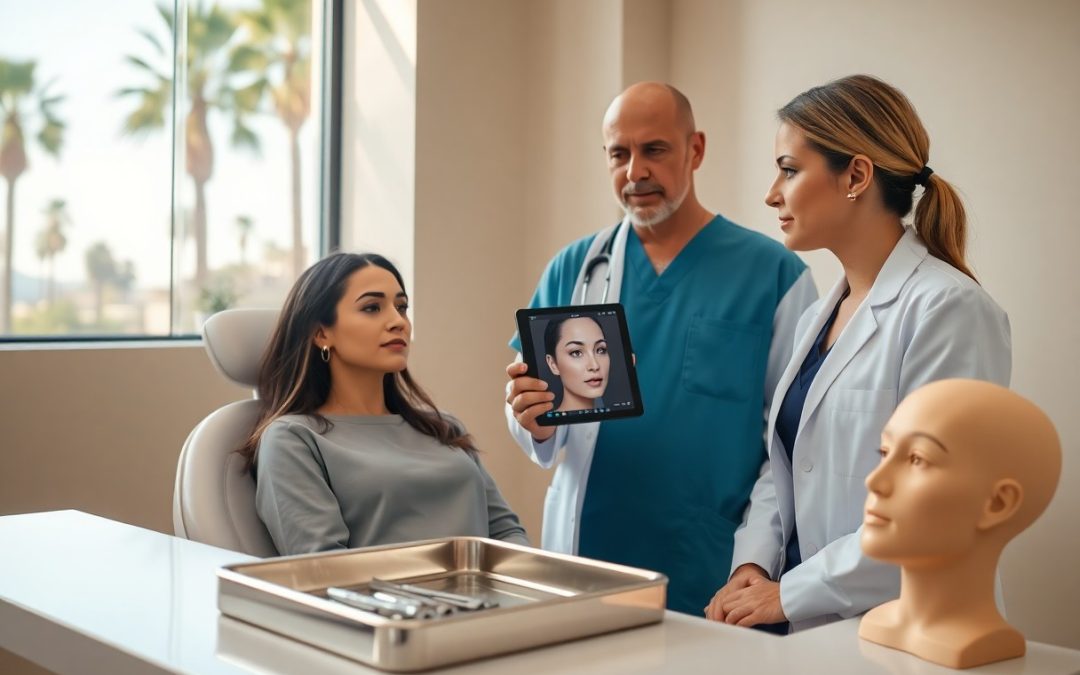
You’ll undergo a structured assessment that goes beyond photos: detailed medical history, facial measurements, skin quality analysis, and functional checks (breathing, vision, TMJ) to map what’s possible. High-resolution 3D imaging systems like VECTRA or Morpheus8 simulations let you preview changes quantitatively-showing, for example, a 2-4 mm dorsal reduction for a refined nasal bridge or the volumetric effect of adding 5-15 mL of fat to the midface-so you and your surgeon can agree on measurable targets.
During goal-setting you’ll review staged timelines and expected recovery phases: immediate postoperative swelling for 7-14 days, most noticeable contour changes by 6-12 weeks, and final refinements often at 6-12 months. Case-based planning is typical: for instance, a 45-year-old patient seeking midface rejuvenation may pair conservative filler treatments first, assess soft-tissue response at three months, then proceed to fat grafting if additional volume is needed, reducing the risk of overcorrection.
Customized, staged plans that prioritize safety and realism
Your surgeon will build a stepwise plan tailored to your anatomy and lifestyle, often starting with minimally invasive options to test aesthetic direction before committing to permanent changes. Combined procedures are chosen selectively: a facelift and neck lift can be safely performed together, while adding complex rhinoplasty or extended operating time may be split into separate stages to keep anesthesia below common safety thresholds (many practices aim to limit elective cases to under six hours when possible).
Expect explicit safety measures in the plan-preoperative optimization (smoking cessation for at least four weeks, blood pressure control, and glycemic management if diabetic), perioperative DVT prevention, and staged follow-up visits at 1 week, 6 weeks, 3 months, and 12 months to monitor healing and outcomes. You’ll also get contingency criteria: what degree of asymmetry or persistence of swelling warrants delayed revision versus natural remodeling over the first 6-12 months.
For practical examples, surgeons frequently stage profile refinements: performing rhinoplasty first to establish nasal proportions, then reassessing chin projection after three to six months before placing an implant or performing genioplasty-this approach avoids unnecessary implants and achieves a more balanced, natural result tailored to how your tissues actually settle.
Techniques and Technologies That Enhance Natural Outcomes
Minimally invasive thinking and selective use of technology let you achieve subtle, balanced changes rather than an overdone appearance. Surgeons combine precise surgical maneuvers with targeted non-surgical treatments-for example, conservative tissue removal plus 1-3 mL of hyaluronic acid to restore lost cheek volume-so results look like a refreshed version of you instead of a dramatic transformation.
Staging procedures is common: you might have a primary surgery to correct structural issues and a secondary in-office refinement using fillers, neuromodulators, or energy devices four to six months later. That staged plan reduces the chance of overtreatment and allows your surgeon to fine-tune contours once swelling has fully resolved.
Tissue-sparing surgical techniques and refined incision placement
When surgeons use tissue-sparing approaches-SMAS plication instead of extensive undermining, limited deep-plane release, or local-fat preservation-you retain more native support and vascularity, which improves healing and sensation. Incisions are placed in natural transition zones (preauricular creases, postauricular hairline, or mucosal margins), and are typically measured in millimeters when refined closure techniques are applied, yielding scars that become nearly imperceptible after proper postoperative care.
Endoscopic options and short-scar variants let you get targeted lifting with smaller access points; for example, endoscopic brow lifts use 3-4 mm portal incisions in the scalp, while modern facelift closures focus on tension-free multilayer repair to limit scar widening and avoid distortion of adjacent structures. Preserving retaining ligaments and minimizing subdermal plexus disruption also lowers prolonged numbness and contour irregularities, so your final result reads as naturally restored tissue rather than surgically altered anatomy.
Use of fillers, neuromodulators, lasers, and adjunctive therapies
Fillers and neuromodulators are used not as replacements for surgery but as precision tools to refine outcomes: you can expect 0.5-2.0 mL per side for cheek augmentation, 1 mL for tear trough correction in select patients, and typical onabotulinumtoxinA dosing around 18-25 units for moderate glabellar lines. Energy-based devices-fractional CO2 (10,600 nm), Er:YAG (2,940 nm), nonablative fractional lasers, and microfocused ultrasound (Ultherapy)-address skin texture, laxity, and pigmentation with predictable downtime profiles (ablative CO2: 7-14 days; nonablative fractional: 2-5 days), letting you match treatment intensity to your goals and recovery tolerance.
Adjunctive therapies such as PRP combined with microneedling, RF microneedling (Morpheus8), and low-fluence picosecond lasers provide collagen stimulation with lower risk in darker skin types; many Orange County practices customize combinations-for example, RF microneedling sessions spaced 6-8 weeks apart for Fitzpatrick IV-VI-to optimize tightening while minimizing postinflammatory hyperpigmentation. Using hyaluronic acid fillers for volume restoration and botulinum toxin to soften dynamic motion reduces the need for aggressive surgical tissue excision.
Safety and contingency planning matter when you get injectable or energy-based refinements: your surgeon should map vascular anatomy before deep filler placement, carry hyaluronidase for intravascular complications, and tailor laser wavelengths to your Fitzpatrick type (ultrapulse CO2 is powerful but higher risk in darker skin, whereas fractional nonablative or RF modalities are safer alternatives). Combining modalities-botulinum toxin to relax hyperdynamic areas, 1-2 mL HA to restore volume, then a single fractional laser session three months later-often yields a cohesive, natural result with predictable recovery and clear escalation pathways if further refinement is needed.
Recovery, Aftercare, and Long-Term Maintenance
Postoperative care, scar management, and follow-up protocols
You should plan for intensified care in the first 48-72 hours: keep your head elevated, use cold compresses to limit swelling, take prescribed analgesics as directed (acetaminophen/NSAID protocols are common; short opioid courses only when necessary), and expect drains, if placed, to be removed within 24-72 hours. Incisions are usually left covered for the first 24-48 hours, then gently cleansed with saline; non-dissolvable sutures are typically removed between day 5 and day 14 depending on the area-facial sutures often come out at 5-7 days, body sutures later-so follow the surgeon’s timeline exactly to reduce tension and infection risk.
Begin scar management once the epidermis has closed (generally 7-14 days): apply silicone gel or sheets daily-clinical practice shows these reduce redness and thickness-and start gentle cross-friction massage at about 3 weeks to encourage pliability. Protect scars from UV for at least 6-12 months using broad-spectrum SPF 30+ (preferably physical blockers like zinc oxide), and discuss early interventions for abnormal scarring (intralesional steroid injections at 6-12 weeks, pulsed-dye laser for persistent erythema, fractional lasers for contour irregularities usually after 3-6 months). Expect an organized follow-up schedule (48-72 hour check, 1 week, 1 month, 3 months, 6 months, 12 months) so your surgeon can monitor healing, adjust care, and document progress with photos.
Lifestyle guidance, sun protection, and periodic touch-ups
You should stop smoking at least 4 weeks before and 4 weeks after surgery-ideally permanently-as nicotine reduces blood flow and raises wound-healing complications significantly. Optimize nutrition by aiming for roughly 1.2-1.5 g/kg/day of protein during recovery, keep hydration steady, and avoid heavy alcohol for 2 weeks post-op to limit bleeding and swelling; light activity can often resume within 7-14 days, while vigorous exercise is usually delayed 4-6 weeks depending on the procedure.
Daily sun protection is non-negotiable for maintaining results: use a broad-spectrum SPF 30+ (SPF 50 or physical mineral sunscreens if you have recent scars), reapply every two hours when exposed, wear UPF clothing and wide-brim hats, and avoid tanning beds for at least 6-12 months because UV promotes hyperpigmentation and scar darkening. For long-term aesthetics, plan periodic maintenance-Botox every 3-4 months for dynamic lines, hyaluronic acid fillers every 6-18 months depending on product and placement, and skin-resurfacing options (IPL, fractional laser, or microneedling/PRP) on a 12-18 month cycle tailored to your skin type and goals.
For example, a common maintenance plan includes daily SPF 30+, topical retinoid introduced around 8-12 weeks post-healing to support collagen remodeling, an annual light laser or IPL session for tone and texture, and injectables as needed; your surgeon will customize intervals based on how your tissues age and respond over the first year.
Conclusion
You can achieve natural-looking results by choosing an Orange County cosmetic surgeon who tailors techniques to your anatomy, prioritizes proportion and subtlety, and applies advanced, evidence-based methods. You benefit from thorough consultations, realistic outcome planning, and attentive postoperative care that preserve your features while enhancing balance. You should expect clear communication and personalized follow-up to ensure outcomes that look and feel authentic.