
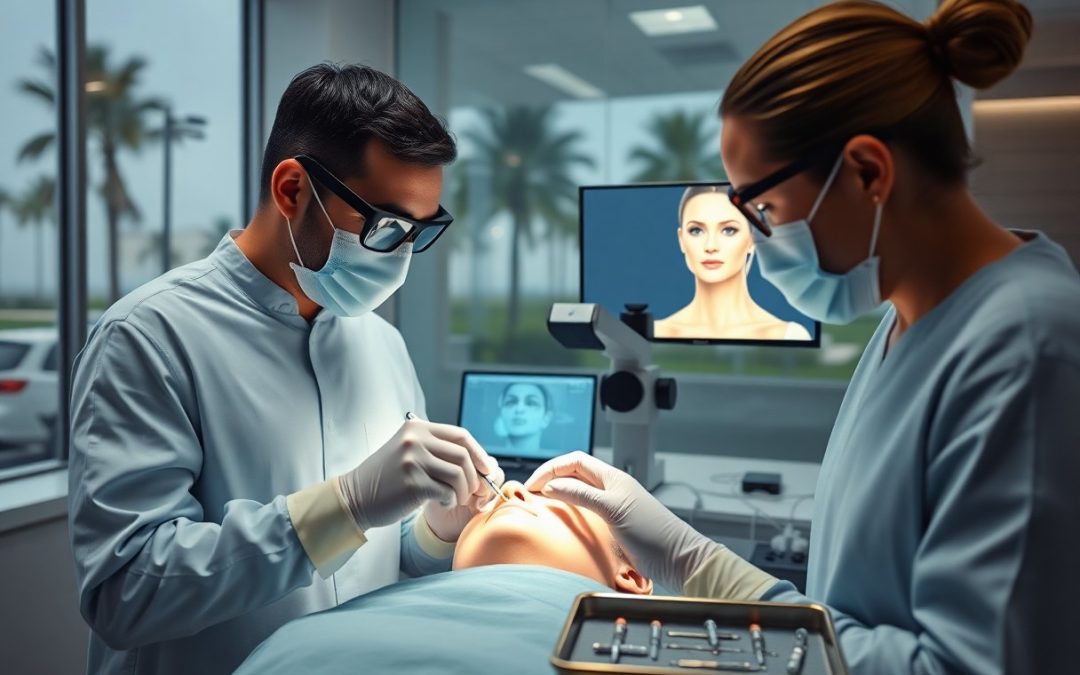
You will see how top Orange County cosmetic surgeons deploy lesser-known approaches-microcannula and nanofat grafting, intradermal microdosing of neuromodulators, ultrasound-guided filler placement, endoscopic SMAS plication, subdermal radiofrequency remodeling, and targeted PRP/PRF injections-to produce subtle, natural enhancements that respect your unique anatomy and aging pattern, combining precise tissue repositioning, regenerative techniques, and energy-based tightening to refine without obvious alteration.
Skin micro-modulation techniques
You’ll see top surgeons use micro-modulation as a way to nudge the skin’s biology rather than overhaul it – creating controlled, microscopic injury patterns that provoke remodeling without overt change. Treatments are tailored to coverage and depth: think single-digit percentage coverage with fractional non‑ablative lasers or pinpoint plasma sublimation to smooth texture while keeping visible downtime to 24-72 hours in most cases.
In practice that means choosing parameters to match your baseline skin and goals: lower energy and lower density for subtle smoothing, or slightly higher settings for mild laxity and deeper rhytids, always delivered in a series (typically 2-4 sessions spaced 4-6 weeks). Combining these micro-injuries with adjuncts such as topical growth factors, PRP, or transepidermal delivery techniques magnifies collagen response while preserving a natural result.
Low-energy fractional and plasma resurfacing for refined texture
When texture is the main concern, surgeons favor low-energy fractional platforms – commonly 1550 nm erbium-glass or 1540 nm devices – set to 5-15% density and pulse energies in the lower clinical range (often described in the literature as 10-20 mJ per microthermal zone) to create sparse microthermal zones that stimulate dermal remodeling without full epidermal removal. Typical protocols are three sessions spaced 4-6 weeks apart; you should expect transient erythema and mild edema for 24-72 hours and measurable improvement in fine lines and pore appearance after the second treatment.
Plasma-based resurfacing (eg, plasma pen/fibroblast or low-energy nitrogen/helium plasma used superficially) works similarly by controlled surface sublimation and microcontraction. In a common example, a single focused plasma session to the periorbital area for upper-lid laxity or crepey skin produces visible tightening within 4-8 weeks with downtime of roughly 3-7 days; surgeons often combine one low-energy fractional pass plus a single plasma session to accelerate surface smoothing while minimizing textural irregularities that can follow more aggressive resurfacing.
Laser-assisted biostimulation and controlled inflammation to stimulate collagen
Top practitioners use subablative and picosecond modalities to create controlled, non‑ablative microinjury – laser-induced optical breakdown (LIOB) with picosecond pulses or low‑fluence fractional thermal pulses – to trigger fibroblast activation and new collagen without a prolonged healing phase. Protocols frequently call for 2-4 treatments spaced 4-8 weeks; histologic series commonly show increased dermal collagen and thickness between 8 and 12 weeks post‑treatment, correlating with measurable improvement in skin firmness and fine lines.
You’ll often see this approach paired with adjunct biologics: applying PRP immediately after a fractional pass or using laser-assisted transdermal delivery to drive topical peptides and retinoids deeper amplifies the biostimulatory cascade. For instance, a case series of middle‑aged patients treated with three picosecond LIOB sessions plus PRP reported subjective improvement in elasticity of 25-35% at three months with minimal downtime.
To fine‑tune results, surgeons modulate the inflammatory window rather than abolish it – keeping inflammation low-grade and spatially precise so fibroplasia and type I collagen deposition dominate during remodeling; that strategy gives you progressive tightening and texture refinement over 2-4 months without the overt signs of aggressive resurfacing.
Fat-based refinements
You can use fat not just for bulk restoration but for refined, long-lasting contouring: microfat grafts placed in 0.05-0.2 mL microdroplets restore malar projection, soften tear trough hollows (typical tear trough volumes are 0.5-2 mL per side), and improve dorsal hand volume with predictable longevity. Survival rates vary, commonly reported between ~40-80% depending on technique and recipient bed, so surgeons harvest slightly more than the target volume and plan staged touch-ups when aiming for subtle symmetry.
Technique details matter: harvest with low-suction tumescent technique, process by low-speed centrifugation (~3,000 rpm for 2-3 minutes) or gentle decanting to preserve adipocytes, and inject in multiple planes with blunt microcannula passes to minimize trauma and resorption. Expect transient swelling for 1-2 weeks and final contour maturation over 3-6 months; you should plan follow-up imaging or photos at 3 and 6 months to assess retention and decide on minor revisions.
Microfat grafting for subtle contour and volume restoration
When you need fine reshaping rather than bulk, microfat harvested through 1.2-2.4 mm cannulas lets you place small parcels of viable fat into subdermal and subcutaneous planes-common donor sites are the abdomen or medial thigh, with harvest volumes often 5-30 mL to yield the few milliliters needed for facial refinement. Injecting tiny aliquots along multiple vectors (0.05-0.2 mL per pass) promotes neovascularization and minimizes cystic nodules; for example, layering 3-5 passes across the tear trough achieves smooth blending without overt fullness.
Combination strategies enhance outcomes: you can mix microfat with 10-20% PRP to boost early graft take or add a mechanically isolated SVF concentrate to increase cellularity and potentially improve retention by an estimated 10-25% in some series. In practice, plan conservative initial volume and stage a 10-20% touch-up after 3-6 months if asymmetry or undercorrection persists.
Nanofat and SVF-enriched injections to improve skin quality
Nanofat is produced by emulsifying microfat through repeated passes between syringes and filtering down to a fluid suspension that retains stromal cells and growth factors but not intact adipocytes, so you inject it intradermally or superficially subdermal to improve skin texture, pore size, and scar quality. Typical preparation involves 30-50 passes and filtration through 400-600 μm meshes; clinical applications include periorbital rejuvenation, acne scar resurfacing, and fine-line softening where you might inject 0.02-0.1 mL per linear thread across treatment zones.
SVF-enriched injections combine concentrated stromal vascular fraction with microfat or nanofat to maximize regenerative potential-SVF can be isolated mechanically on the same day or enzymatically in a lab setting, though regulatory rules vary by region. Reports and case series show improvement in skin elasticity, dermal thickness on ultrasound, and high patient satisfaction; you often see objective gains within 6-12 weeks as collagen remodeling progresses.
Operational details you should note: when using nanofat or SVF you inject very superficially with 27-30G cannulas or needles for dermal planes, limit total intradermal volumes to avoid overcorrection, and counsel patients about mild erythema and temporary nodularity lasting days to weeks. Additionally, many surgeons prefer mechanical SVF isolation or same-day systems to avoid regulatory complexity, and combining nanofat with adjuncts like PRP or laser resurfacing has produced synergistic improvements in multiple cohort reports.
Precision neuromodulation and microinjections
When you want imperceptible refinement rather than obvious animation loss, clinicians use layered approaches that combine intradermal microdroplets, low-unit focal injections, and depth-specific placement to modulate activity without freezing expression. In practice that means diluting a 100‑unit vial across 3-10 mL depending on the goal, delivering microboluses of 0.02-0.05 mL (roughly 0.5-2 units per point in many protocols) to the superficial plane for skin texture and fine-line smoothing while keeping larger motor points at conservative doses to preserve lift and symmetry.
By integrating pre-treatment dynamic video capture, digital caliper measurements and staging touch-ups at 10-14 days, you and your injector can titrate response in 0.5-1 unit increments. This staged, data-driven workflow reduces the need for broad paralysis, lets you maintain regional movement (frontalis, zygomaticus, orbicularis), and gives predictable fade patterns so adjustments are straightforward at follow-up.
Microdose botulinum strategies to preserve natural movement
Using microdose techniques you receive targeted weakening of overactive muscle fibers while sparing adjacent elevator or sphincter muscles that create expression. For example, to soften medial brow lines without brow drop many surgeons inject 1-2 intramuscular units at 2-3 focal points over the corrugators and then place intradermal microdroplets (0.5-1 unit) across the forehead’s midline to reduce skin banding without abolishing frontalis tone; the result is diminished glabellar pull with intact eyebrow mobility.
Practical tactics you should expect include lower-volume injections to limit diffusion, fan‑pattern placement for crow’s feet (multiple 0.5-1 unit microinjections along the zygomaticus/orbicularis junction), and conservative initial dosing with a planned 10-14 day review for 0.5 unit top-ups. Those incremental adjustments are often sufficient to achieve balance – for many patients final refinement requires only 2-5 additional units distributed across 1-3 sites.
Targeted mapping for asymmetry correction and expression harmonization
Dynamic mapping starts with you performing standard expressions on video while the injector marks key reference points – mid-pupil vertical, lateral canthus line and peak brow – then quantifies asymmetry in millimeters and degrees using digital calipers and overlay software; a 2-3 mm eyebrow height difference or a 5-10° shift in peak can be reliably measured and used to guide unit placement. In practice this means placing slightly higher doses on the weaker side or reducing doses on the stronger side in 0.5-1 unit steps to nudge harmony rather than overcorrect.
For more complex imbalance such as post‑traumatic or post‑surgical asymmetry you may benefit from adjuncts like EMG localization or ultrasound to confirm muscle bulk and activity before dosing. Staged corrections with small, asymmetric dosing changes at the 2‑week review often yield the most natural outcome; many injectors report that a majority of patients require only a single micro‑adjustment after the initial session to reach the desired symmetry.
Additional refinement techniques include templated injection grids and reproducible photo protocols so you can compare pre- and post-treatment objectively, plus using depth modulation (intradermal versus deep intramuscular) to influence diffusion and potency locally; anticipating onset at 3-14 days and planning maintenance touch-ups at roughly 3-4 months helps you manage expectations when using microdose strategies for subtle harmonization.
Structural micro-surgical maneuvers
You will see top OC surgeons work at a micro level to get refinements that read as natural rather than “operated.” Precision starts with instrumentation and magnification – 2.5x-4x loupes or an operating microscope, microforceps and scissors, and ultrafine sutures – because a millimeter here changes light and shadow on the face. Techniques are deliberately measured: soft-tissue repositioning by 5-15 mm, cartilage trims of 2-4 mm, and staged fixation that lets you evaluate tension in real time rather than committing to a single dramatic change.
Expect an emphasis on structural support rather than just excision. Structural grafts, buried sutures and selective ligament releases create stable scaffolding so your soft tissues sit differently over time, with most contours settling between 6-12 months. Surgeons document intraoperative steps (photographs, measurements) and use reproducible maneuvers to lower revision rates and give you predictable, subtle results.
Tip-sculpting sutures and delicate cartilage reshaping in rhinoplasty
You’ll notice surgeons favor suture-based tip definition using 5-0 or 6-0 absorbable sutures (PDS) or fine non-absorbable monofilaments placed as transdomal, interdomal and medial crural sutures to refine tip rotation and definition without aggressive excision. For projection control, tongue‑in‑groove can adjust tip projection by roughly 1-3 mm while securing the columella; transcolumellar open approaches give direct access for this, whereas experienced endonasal surgeons achieve similar results through internal suturing patterns.
Cartilage reshaping is conservative: cephalic trims are commonly limited to 2-4 mm of lateral crus to avoid ribboning, and lateral crural overlay or turnover techniques are used when you need subtle shortening without weakening support. When dorsal asymmetry or small volume is required, diced cartilage wrapped in temporalis fascia or small septal grafts (2-4 mm increments) are used to smooth contours; expect the tip and dorsum to mature into their final shape over 6-12 months as edema resolves and cartilage settles.
SMAS plication and selective deep-plane adjustments for natural lift
You will see SMAS plication used when you want lift with minimal undermining: suturing the SMAS with 2-0 to 3-0 absorbable (PDS) or braided permanent sutures at key vector points repositions the malar fat and jowl complex 5-15 mm while preserving natural animation. Plication can be placed as interrupted mattress or running sutures, and when combined with limited platysmaplasty it corrects neck contour without extensive skin excision. Surgeons tailor the vector-typically superolateral-to your facial anatomy so the lift restores midface fullness rather than creating a stretched appearance.
When greater release is needed, selective deep‑plane adjustments are employed: targeted release of zygomatic and masseteric retaining ligaments and elevation of the sub-SMAS flap allow true midface mobilization while keeping dissection focused to minimize facial nerve exposure. You’ll notice less superficial tension on closure and a smoother malar roll when the deep-plane component is used judiciously; initial swelling commonly subsides in 7-10 days, with contour refinement seen up to a year.
In practice, surgeons often combine both tactics-SMAS plication for baseline support and single- or two-zone deep-plane release where the tissue is tethered-to achieve a 10-12 month-stable result with low complication rates; intraoperative photography and staged tightening let you assess symmetry and adjust anchor points before skin closure.
Periorbital and eyelid preservation methods
When you pursue subtle periorbital refinement, emphasis lies on conserving fat pads, retaining lymphatic pathways, and protecting orbicularis function so you avoid hollowing and prolonged edema.
By prioritizing dynamic eyelid anatomy, surgeons tailor interventions that preserve blink mechanics and natural contour, helping you maintain a rested, unoperated appearance.
Conservative fat repositioning and minimal-volume debulking
If you favor understated correction, conservative fat transposition smooths the lid-cheek junction while minimal debulking removes only excess, allowing you to keep youthful fullness without an overdone look.
Transconjunctival access and scar-minimizing closure techniques
Avoiding external skin incisions, transconjunctival access gives you lower-eyelid correction with virtually no visible scar, reduced tethering, and preserved support.
Carefully placed buried sutures and precise mucosal alignment permit you faster recovery and predictable contour while minimizing recession or entropion risk.
Minimally invasive lift and camouflaging
Surgeons combine limited-incision lifts with targeted soft-tissue redraping so you gain refreshed contours while avoiding long scars and extensive downtime.
You notice subtle correction when adjuncts like microfat grafting, fractional resurfacing, and percutaneous tightening are used to soften transitions without a full facelift.
Endoscopic portals, suspension threads, and limited-open approaches
Endoscopic portals permit direct visualization through tiny access points, letting the team adjust deep support layers so you get precise lifts with minimal surface disruption.
Suspension threads and limited-open windows anchor tissues to stable fascia and permit minor revisions on follow-up, which helps you refine brows, midface, or jawline with reduced recovery.
Strategic filler layering and grafting to mask transitions and refine borders
Layering microdroplet filler and targeted fat grafts across supraperiosteal and subcutaneous planes lets you smooth lid-cheek junctions and blend borders without obvious augmentation.
Grafting uses blunt cannulas, variable viscosities, and slow deposition so you experience gradual contouring that masks transitions while preserving natural movement and texture.
To wrap up
Ultimately you gain the most natural, understated results when top Orange County surgeons deploy lesser-known refinements such as microcannula and nanofat grafting to restore targeted volume and skin quality, intradermal “micro‑Botox” to soften pores and superfine lines, piezoelectric (ultrasonic) techniques and preservation rhinoplasty for delicate nasal reshaping, and precise SMAS or deep‑plane maneuvers for long‑lasting lift with minimal surface change. They also integrate adjuncts like PRP, nanofat for dermal revitalization, and fractional RF or laser treatments in measured doses to improve texture without obvious intervention, plus suture‑based suspensions (PDO or barbed threads) when a low‑downtime subtle lift is preferred.
Because these approaches are about nuance rather than dramatic transformation, your surgeon’s judgment in customizing combinations, planning conservative tissue handling, and sequencing staged treatments is what produces a refined, natural outcome. When these discreet tools are applied with restraint and an eye for harmony, you experience enhancements that preserve your individual features while improving proportion, tone, and youthfulness.