
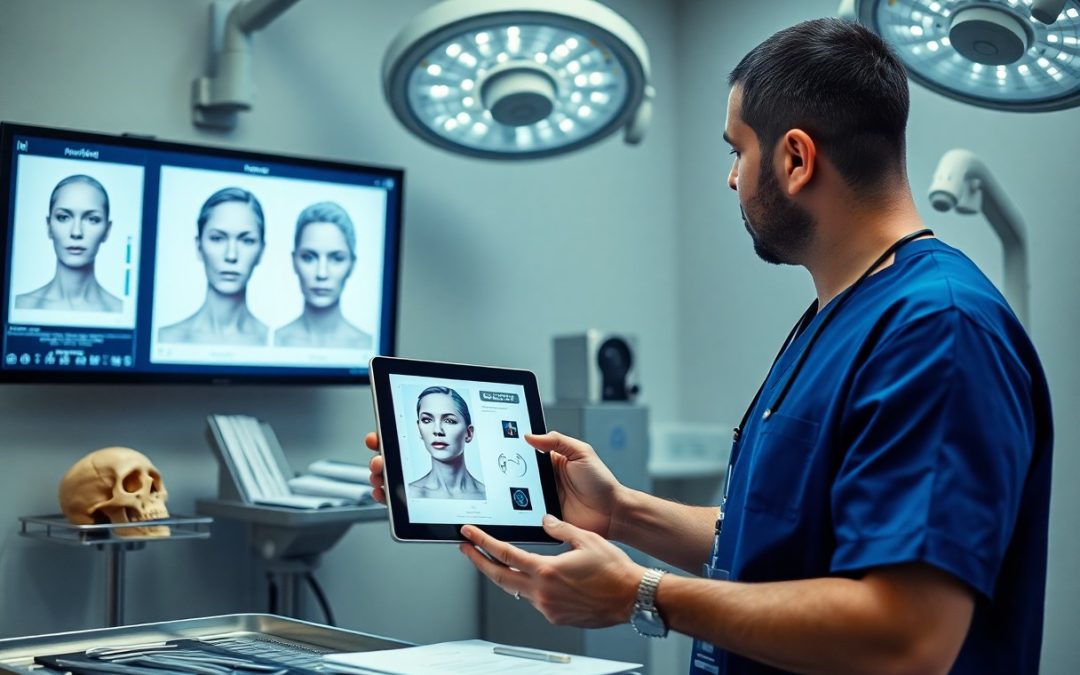
Over multiple consultations, you receive a personalized surgical plan tailored to your anatomy, goals, and lifestyle, with clear risks, recovery expectations, and measurable outcomes to guide informed decisions.
The Shift Toward Personalized Aesthetic Medicine
You now receive treatment plans tailored to your anatomy, goals, and lifestyle, replacing one-size-fits-all procedures with surgical strategies designed specifically for your features.
Moving Beyond Standardized Surgical Templates
Clinicians assess your anatomy and preferences instead of applying standardized templates, customizing incision placement, implant sizing, and recovery plans to fit you.
Respecting Unique Facial and Body Proportions
Your facial and body proportions guide surgical planning, ensuring contours, symmetry, and function align with what you want and who you are.
Assessment of your skeletal structure and soft tissue informs proportionate adjustments, adapting techniques to preserve natural movement and expression while achieving your aesthetic goals.
The Foundation of a Custom Plan: Comprehensive Consultation
Comprehensive consultation lets you discuss history, goals, and concerns while clinicians gather imaging, measurements, and tests to form a personalized surgical plan.
Defining Realistic Patient Goals and Expectations
Clarifying your aesthetic goals helps align surgical options with realistic outcomes and expected recovery, so you can make informed choices with your surgeon.
Evaluating Physical Anatomy and Medical Suitability
Examining your anatomy and health history lets the team assess tissue quality, skin elasticity, symmetry, and any medical risks that may affect technique or timing.
Careful evaluation includes physical measurements, photographic analysis, imaging when indicated, and review of medications and comorbidities so you and the surgeon can choose safest options; smoking status, BMI, prior surgeries, and wound-healing tendencies often change technique or staging, and preoperative optimization can improve outcomes and reduce complications.
Integrating Advanced Technology in Pre-Surgical Planning
You can integrate advanced imaging, simulation and guidance to tailor surgical plans precisely for your anatomy, improving outcome predictability and minimizing intraoperative guesswork while aligning expectations with realistic visual previews and measurable metrics.
- 3D anatomical capture
- Virtual outcome simulation
- Precision landmark mapping
- Intraoperative tracking
- Patient-specific guides and implants
Technology and Benefit
| 3D Imaging | Creates accurate anatomical models for planning |
| Virtual Simulation | Allows outcome previews and plan adjustments |
| Precision Mapping | Defines landmarks and incision targets |
| Intraoperative Tracking | Maintains planned orientation during surgery |
| Custom Guides/Implants | Improves fit and reduces intraoperative adjustments |
Utilizing 3D Imaging and Virtual Simulations
Using 3D imaging and virtual simulations, you preview surgical outcomes, experiment with options and confirm volumetric changes before incision, giving you clearer consent conversations and a data-driven plan.
Precision Mapping for Structural Enhancements
Mapping anatomical landmarks and tissue planes lets you pinpoint incision sites, optimize implant placement and reduce asymmetry through millimeter-level guidance during planning and surgery.
Detailed maps derived from CT, MRI and surface scans give you a multimodal blueprint of bone, soft tissue and vascular structures, enabling precise landmark registration and biomechanical modeling. You can generate patient-specific guides, plan osteotomies with angulation and depth targets, and simulate implant fit using CAD-based templates. Intraoperative guidance references these maps to maintain planned trajectories, while postoperative comparison to pre-op models quantifies accuracy and informs iterative improvement of your technique and patient counseling.
Developing a Multidisciplinary Treatment Approach
Careful coordination among specialties helps you receive a tailored plan that combines surgical precision with aesthetic continuity and postoperative support.
Harmonizing Surgical Techniques with Non-Invasive Procedures
Surgeons and aesthetic physicians coordinate to balance incisions, fillers, energy devices, and skin treatments so you achieve complementary outcomes without overcorrection.
Sequencing Interventions for Natural-Looking Results
Planning the timing of procedures lets you stage surgeries and noninvasive steps to minimize swelling, optimize healing, and reveal gradual, natural improvements you can appreciate.
You benefit when clinicians map a stepwise timeline-addressing structural changes first, then soft-tissue refinements, and finally skin quality-so each stage heals before the next begins, reducing cumulative swelling, allowing realistic outcome assessment, and providing opportunities for minor touch-ups based on how your tissues respond and how your aesthetic goals evolve.
Safety Protocols Tailored to Individual Risk Profiles
You receive a safety protocol matched to your age, history, and procedure risk, combining targeted preoperative testing, intraoperative monitoring, and contingency plans so the team adapts care to your specific vulnerabilities and reduces complications.
Managing Patient-Specific Health Considerations
Preoperative evaluation identifies your cardiac, pulmonary, metabolic, and medication risks so the team adjusts timing, diagnostics, and perioperative medications to protect organ function and optimize surgical candidacy for safer outcomes.
Customizing Anesthesia and Post-Operative Pain Management
Anesthesia plans weigh your allergies, prior responses, and pain tolerance to select agents, regional blocks, and monitoring that minimize intraoperative stress while planning multimodal, opioid-sparing postoperative analgesia tailored to your recovery goals.
Postoperative and intraoperative strategies include preanesthetic assessment that classifies your risk and guides agent selection, dosing, and monitoring; regional techniques and local infiltration reduce opioid needs, while scheduled nonopioid analgesics, gabapentinoids, and targeted nerve blocks control pain with fewer side effects; clear discharge prescriptions and follow-up ensure you have a safe tapering plan and know when to seek care.
Long-Term Maintenance and Personalized Aftercare
Your long-term aftercare plan includes scheduled check-ins, tailored skincare, and lifestyle recommendations so you sustain results while addressing changes over time.
Designing Individualized Recovery Schedules
Customized recovery schedules align follow-up visits, activity progression, and medication timing with your healing speed and daily obligations to optimize recovery without unnecessary restrictions.
Strategies for Preserving and Enhancing Surgical Outcomes
Proactive scar management, sun protection, nutritional guidance, and targeted non-surgical treatments help you preserve results and minimize long-term complications.
Regular follow-up visits let your surgeon monitor healing, recommend non-surgical touch-ups (laser, fillers, topical regimens), and customize lifestyle guidance-sleep, nutrition, and smoking avoidance-to extend results and address complications early.
To wrap up
So you receive a customized cosmetic surgery plan that assesses your anatomy, goals, medical history, and recovery needs, giving you clear risks, realistic outcomes, and a step-by-step timeline to make an informed decision with confidence.