

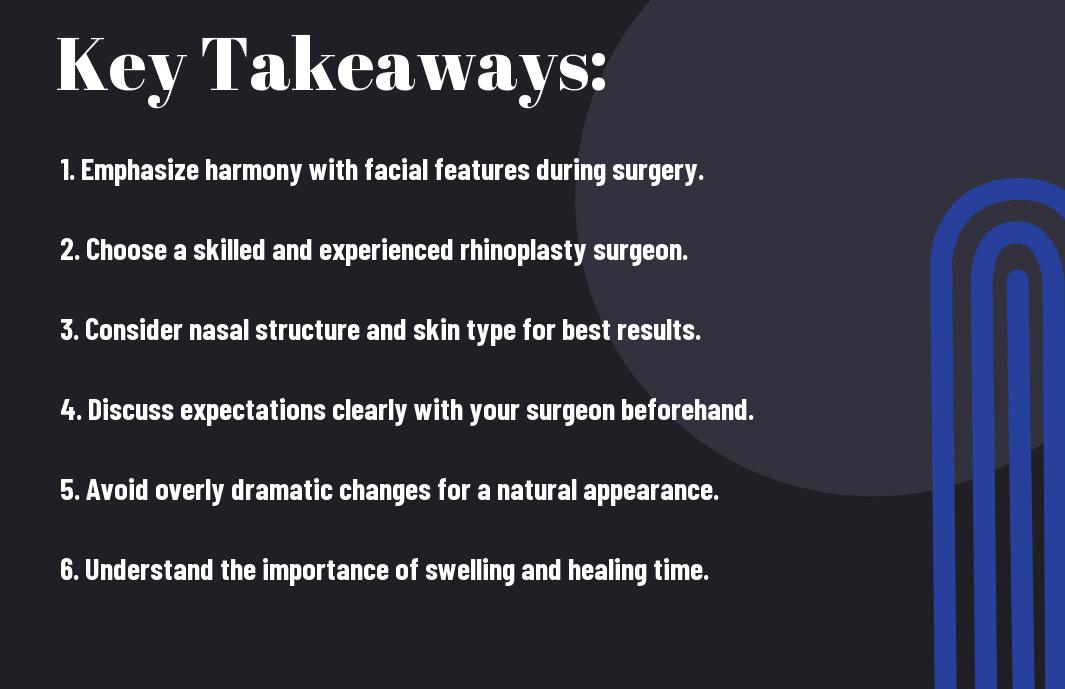
Many people desire a nose that harmonizes perfectly with their facial features, and achieving that natural look in rhinoplasty requires careful consideration and planning. You want results that enhance your beauty without appearing artificial, and understanding the key factors involved is vital. In this post, we’ll explore the best practices, techniques, and expert insights that can guide you toward a successful, aesthetically pleasing outcome that feels uniquely yours.
Understanding Rhinoplasty
A rhinoplasty is a surgical procedure designed to enhance the shape and function of your nose, tailored to your specific aesthetic goals and functional needs. Whether you’re aiming for a subtle refinement or a more pronounced change, understanding the different aspects of rhinoplasty can significantly affect your results and satisfaction.
What is Rhinoplasty?
After deciding to explore rhinoplasty, you should know it involves surgery to reshape your nose, enhancing both appearance and function. This procedure can address various concerns, including size, shape, and breathing difficulties, providing a more harmonious balance with your facial features.
Types of Rhinoplasty Procedures
Besides traditional options, there are several types of rhinoplasty procedures to consider:
- Open Rhinoplasty
- Closed Rhinoplasty
- Reconstructive Rhinoplasty
- Aesthetic Rhinoplasty
- Revision Rhinoplasty
| Type | Description |
| Open Rhinoplasty | Involves an external incision allowing greater visibility and access. |
| Closed Rhinoplasty | All incisions are hidden inside the nose, promoting quicker recovery. |
| Reconstructive Rhinoplasty | Focuses on restoring function after trauma or surgery. |
| Aesthetic Rhinoplasty | Primarily focuses on improving the nose’s look. |
| Revision Rhinoplasty | For correcting or improving previous nose surgeries. |
In fact, each type of procedure has its own set of benefits and considerations. It’s necessary for you to communicate your goals with your surgeon to determine which option best suits your desires and anatomy.
- Understand your goals clearly.
- Consult with a board-certified plastic surgeon.
- Discuss your medical history thoroughly.
- Analyze before-and-after photos of similar procedures.
- Prepare for both the procedure and recovery time.
| Consideration | Importance |
| Surgical Experience | Look for a skilled surgeon with rhinoplasty experience. |
| Desired Outcome | Be clear about what you want to achieve. |
| Recovery Time | Be prepared for downtime post-surgery. |
| Candidacy | Know if you’re a good candidate based on health factors. |
| Costs | Evaluate the costs associated with different types of procedures. |
Key Factors for a Natural Look
The key factors to achieving a natural-looking rhinoplasty involve a deep understanding of your facial structure and aesthetic goals. These include:
- Preserving individuality
- Maintaining facial symmetry
- Considering ethnic features
- Collaborating with an experienced surgeon
Perceiving these elements ensures that your results enhance your natural beauty rather than create an artificial appearance.
Facial Harmony and Balance
Factors that contribute to facial harmony and balance include the proportions of your nose to your other facial features. A well-executed rhinoplasty considers your unique facial dimensions, ensuring that your nose complements rather than overwhelms your overall look.
Customized Surgical Plans
Above all, customized surgical plans play a significant role in attaining a natural result. Each individual’s anatomy and desired aesthetic are unique, requiring a tailored approach to achieve the best outcome.
Also, a personalized surgical plan involves thorough consultations and detailed assessments of your facial features. Discussing your preferences and expectations with your surgeon allows them to design a procedure that aligns with your vision while respecting the natural contours of your face. This thoughtful planning fosters an outcome that appears authentic and harmonious, blending seamlessly with your unique attributes.
Choosing the Right Surgeon
Despite the many options available, selecting the right surgeon for your rhinoplasty is vital for achieving a natural-looking result. You should prioritize finding a skilled professional who understands your aesthetic goals and has a proven track record in performing successful procedures. Take your time to research various surgeons and don’t hesitate to ask questions that will help ensure you’re making the best decision for yourself.
Experience and Credentials
To ensure you receive top-quality care, look for a surgeon who possesses extensive experience and proper credentials in rhinoplasty. Verify their education, board certification, and specialized training in facial aesthetics. This background will give you confidence that they have the expertise to deliver the results you’re seeking.
Patient Reviews and Testimonials
An effective way to gauge a surgeon’s proficiency is to examine patient reviews and testimonials. These insights from previous clients can reveal both the surgical skill and the overall experience offered by the surgeon.
A wealth of positive reviews often reflects a surgeon’s commitment to patient satisfaction. When reading testimonials, pay attention to comments focusing on results similar to what you envision for yourself. Look for before-and-after photos if available, as they provide a tangible reference for the surgeon’s capabilities. Checking third-party review sites can give you an unbiased view of their reputation and help you make an informed choice.

Pre-Surgery Preparation
Once again, preparing for a rhinoplasty involves several important steps to ensure the best outcome. You’ll want to have thorough discussions with your surgeon and disclose your medical history. It’s imperative to follow preoperative instructions, such as avoiding certain medications and quitting smoking, to minimize risks and promote healing. Proper preparation sets the foundation for a natural-looking result that meets your aesthetic goals.
Consultations and Assessments
Any successful rhinoplasty journey begins with detailed consultations and assessments with your surgeon. This will include a discussion of your aesthetic preferences and a thorough evaluation of your facial structure. The surgeon will assess your nasal anatomy and discuss potential techniques that align with your goals, ensuring your results will be as natural as possible.
Setting Realistic Expectations
Among the most vital aspects of your rhinoplasty journey is setting realistic expectations for your results. Understanding the limitations of the procedure will help you appreciate what can be achieved and avoid disappointment.
In fact, setting realistic expectations involves discussing the potential outcomes and visualizing the changes with your surgeon. By reviewing before-and-after photos of previous patients with similar features, you can gain insight into achievable results. Your surgeon will also explain factors that may affect healing and final outcomes, helping you to envision a result that enhances your natural beauty rather than striving for an unrealistic ideal. This balanced approach will contribute to a more satisfying rhinoplasty experience.
Post-Operative Care
All patients must prioritize post-operative care to ensure a smooth recovery and the best possible results from their rhinoplasty. Following your surgeon’s instructions regarding medication, rest, and activity restrictions is necessary. You may encounter some swelling and bruising initially, but proper care can help manage these symptoms effectively. Taking the time to focus on healing will enable you to enjoy your new natural look more quickly.
Recovery Timeline
An understanding of the recovery timeline post-rhinoplasty can help set realistic expectations. The initial swelling typically peaks around the third day and gradually subsides within a few weeks. By the end of the first month, most of the swelling will have significantly decreased. However, subtle changes in your nasal contour may continue for several months as healing progresses. Being patient during this period is vital for achieving your desired outcome.
Importance of Follow-Up Appointments
Across your recovery period, attending follow-up appointments with your surgeon is important for monitoring your healing progress. These visits allow your surgeon to assess the surgical results and address any concerns you may have. Regular check-ins help ensure that your nose is healing properly and that complications, if any, can be addressed early on to maintain your new look.
Also, follow-up appointments provide an excellent opportunity to discuss any questions or uncertainties you have regarding your recovery. Your surgeon can offer tailored advice and adjustments to your post-operative care regimen, ensuring everything aligns with your healing process. Staying engaged in this follow-up journey will help you achieve the best possible outcome from your rhinoplasty, allowing you to fully embrace your new appearance.
Common Myths about Rhinoplasty
Now, many people hold misconceptions about rhinoplasty that can lead to misconceptions about the procedure and its outcomes. Understanding these myths can help you make a more informed decision if you’re considering this transformative surgery. Let’s address some of the most common misunderstandings surrounding rhinoplasty.
Misconceptions about Results
Against popular belief, rhinoplasty doesn’t always yield an artificial look. When performed by a skilled surgeon, the goal is to enhance your facial harmony and maintain your natural appearance. The results can be subtle yet impactful, tailored to your unique features rather than conforming to unrealistic standards.
Myths on Recovery and Pain
Common myths suggest that rhinoplasty recovery is excessively painful and prolonged. However, the experience varies from person to person, and many report manageable discomfort during the healing process.
Hence, while some discomfort is expected, advances in surgical techniques and anesthesia mean that you can often control pain effectively with prescribed medications. Most patients find that initial swelling diminishes significantly within a few weeks, allowing for a return to normal activities sooner than anticipated. Open communication with your surgeon can provide a realistic timeline for recovery.
Conclusion
Following this guide will help you achieve a natural-looking rhinoplasty that enhances your features while maintaining balance and harmony with your face. It’s necessary to choose a qualified surgeon who understands your aesthetic goals and communicates effectively with you throughout the process. Prioritize understanding the techniques and considerations involved in the procedure to make informed decisions. Ultimately, your satisfaction stems from a collaborative approach, ensuring the final result aligns with your vision of beauty.