

Many individuals seeking a subtle rejuvenation of their facial appearance often consider a mini facelift as an option. This innovative procedure offers a less invasive alternative to traditional facelifts, targeting drooping skin and restoring youthful contours. In this article, you’ll discover key information about the mini facelift, including its benefits, recovery time, and whether it aligns with your cosmetic goals and lifestyle. By educating yourself, you’ll be better equipped to make an informed decision about whether this procedure is the right fit for you.
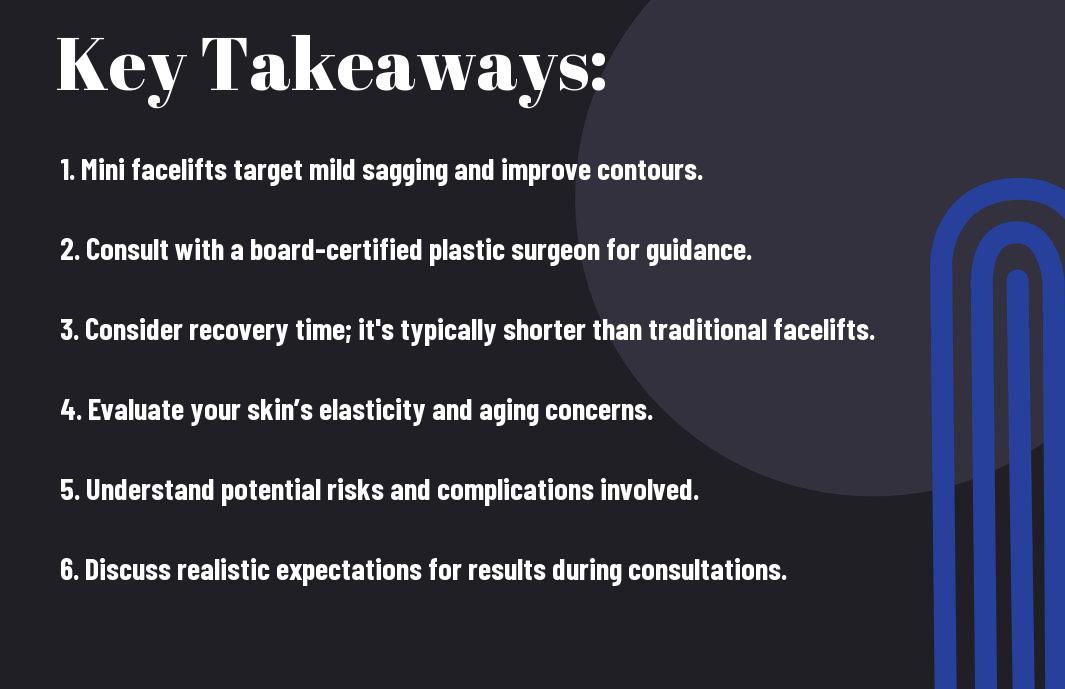
Understanding Mini Facelift
Before considering cosmetic surgery, it’s important to understand what a mini facelift entails. This less invasive procedure focuses on rejuvenating the lower face and neck without the extensive recovery of a traditional facelift. You’ll experience minimized downtime while still achieving noticeable improvements in facial contour and elasticity.
Definition and Overview
After a mini facelift, your face will appear firmer and more youthful, addressing early signs of aging. Typically, the surgery involves tightening the skin and underlying muscles through smaller incisions, making it a preferred option for those seeking subtle enhancements.
Differences Between Mini Facelift and Traditional Facelift
Around a mini facelift, the key differences lie in the extent of treatment and recovery time. A mini facelift primarily addresses the lower face, whereas a traditional facelift treats a larger area, including the mid-face and neck. This means that while the traditional option offers more dramatic results, it also requires a longer recovery period.
In addition, the techniques used in a mini facelift are generally less invasive, allowing for smaller incisions and a quicker recovery compared to traditional facelifts. You may find that the mini facelift is ideal if you’re looking for subtle changes rather than a complete overhaul, making it a great option for those in the early stages of aging, or who desire a less extensive procedure. Your choice should depend on your individual goals and the level of enhancement you wish to achieve.
Benefits of a Mini Facelift
Now, many people consider a mini facelift for its ability to deliver noticeable results with shorter recovery times than traditional procedures. This treatment can effectively tighten loose skin, improve facial contours, and restore a youthful appearance, allowing you to feel refreshed and revitalized. The procedure often targets specific areas like the jawline and cheeks, ensuring your results are both subtle and natural-looking.
Physical Benefits
At a mini facelift, you can expect significant physical improvements, especially in the lower face and neck regions. The procedure can reduce sagging skin, diminish jowls, and enhance your overall facial symmetry. With less extensive incisions, you will likely experience minimal scarring, allowing you to enjoy a youthful appearance while maintaining your natural features.
Psychological Advantages
Benefits of a mini facelift extend beyond the physical, often leading to increased self-esteem and improved body image. After undergoing the procedure, you may find yourself feeling more confident in your appearance, which can positively influence various aspects of your life.
But the psychological advantages can be profound. Many individuals report a boost in their social interactions and overall satisfaction with life following a mini facelift. Feeling good about your appearance can lead to increased self-assurance, allowing you to engage more fully in personal and professional relationships. By addressing concerns about aging and appearance, you empower yourself to embrace new experiences with renewed confidence.
Ideal Candidates for a Mini Facelift
Many individuals who are in good health and seeking a subtle facial rejuvenation may be ideal candidates for a mini facelift. This procedure is particularly beneficial for those who have mild to moderate signs of aging, such as loose skin or sagging around the cheeks and jawline, but still possess relatively good skin elasticity. If you’re looking to enhance your appearance without a complete facelift, a mini facelift could be a viable option for you.
Age Considerations
Above all, age plays a significant role in determining if a mini facelift is suitable for you. Generally, candidates are typically in their 30s to 60s, as this is when the early signs of aging become noticeable. However, individual factors such as skin condition and personal goals are also vital in making your decision.
Skin Type and Elasticity
On top of age, your skin type and elasticity are key factors in candidacy for a mini facelift. If your skin shows signs of elastin degradation, you might not achieve optimal results from the procedure.
To ensure a successful outcome, your skin’s elasticity is paramount; youthful, resilient skin generally leads to better results. If your skin is relatively firm and elastic, a mini facelift can effectively tighten and lift areas of concern. Those with thinner or less elastic skin might not benefit as much or may need to explore alternative treatments to complement the procedure. It’s important to discuss your unique skin characteristics with a qualified professional to determine the best approach for your rejuvenation goals.
The Procedure: What to Expect
All mini facelift procedures typically take a few hours and are performed under local anesthesia with sedation. You can expect minor incisions around your ears and possibly under your chin, allowing the surgeon to reposition your skin and underlying tissues for a more youthful appearance. The recovery time is shorter compared to a traditional facelift, but it’s still important to devote time to healing and follow your surgeon’s post-operative guidelines for optimal results.
Pre-Operative Consultations
Beside discussing your aesthetic goals, your pre-operative consultations will include a thorough evaluation of your medical history and any medications you take. This step is vital for ensuring your safety throughout the procedure. Your surgeon will also explain the techniques used and address any questions or concerns you may have, preparing you both mentally and physically for the surgery.
Surgical Process
By the time your surgery day arrives, you’ll have all the information you need to feel confident. The surgery often starts with the administration of local anesthesia, followed by small incisions made in discreet locations. The surgeon will then lift and pull back sagging skin, adjust underlying tissues, and remove any excess skin to achieve a more rejuvenated look. After the adjustments, the incisions are closed, and you will be taken to recovery.
A mini facelift is designed to provide impressive results with minimal downtime. Typically, the procedure lasts between one and two hours, and you may feel some discomfort, which can be managed with prescribed pain relief. Within a few days, most patients can resume light activities, but it’s advisable to avoid strenuous exercise for a few weeks. Follow-up appointments will be scheduled to monitor your progress and ensure your healing is on track, ultimately leading to your refreshed appearance.

Recovery and Aftercare
Despite undergoing a mini facelift, your journey doesn’t end in the operating room. The recovery process is vital for achieving optimal results, and proper aftercare is imperative. You may experience swelling and bruising for a few weeks. Following your surgeon’s instructions regarding medications and wound care will significantly improve your healing experience and help you get back to your daily routine.
Short-Term Recovery
Along with some discomfort, you are likely to experience swelling and bruising in the first few days following your procedure. It’s recommended to rest and keep your head elevated to minimize these effects. Most patients find that they can return to light activities within a week, while more strenuous exercise should be postponed until your doctor gives the green light.
Long-Term Care Tips
Tips for long-term care after your mini facelift can significantly affect your results. Maintaining a healthy lifestyle and skincare routine is imperative. Consider the following:
- Stay hydrated and eat a balanced diet rich in vitamins.
- Use sunscreen daily to protect your skin from UV damage.
- Avoid smoking and limit alcohol consumption.
- Follow up with your surgeon for routine check-ups.
Any adjustments you make now can promote lasting benefits for your appearance and well-being.
Also, engage in gentle exercises, such as walking, to boost circulation and expedite healing. Incorporating these habits into your daily life can enhance your results:
- Be consistent with your skincare regimen.
- Consider using products with hyaluronic acid or peptides.
- Schedule regular facials to maintain skin health.
- Limit sun exposure, especially during peak hours.
Any proactive measures you take will support the longevity of your facelift results.
Potential Risks and Considerations
Unlike non-invasive procedures, a mini facelift comes with various risks and considerations. While these surgical techniques typically involve less recovery time and discomfort than a full facelift, potential complications such as infection, scarring, or anesthesia-related issues can occur. It’s imperative to have an honest discussion with your surgeon about these risks to determine if you are a suitable candidate for the procedure.
Common Complications
Any surgical procedure carries inherent risks, and a mini facelift is no exception. Complications may include:
- Infection
- Hematoma or excessive bleeding
- Unfavorable scarring
- Nerve damage or numbness
Factors Influencing Results
Factors that influence your mini facelift results include your age, skin type, and lifestyle habits. Good skin elasticity is ideal for achieving optimal outcomes. Additionally, your healing process and adherence to post-operative care are vital for achieving desired long-lasting effects. Other elements to consider include:
- Genetics
- Smoking and alcohol consumption
- Sun exposure and skincare routine
- Overall health status
Potential outcomes from a mini facelift may vary widely based on individual factors. Your age and skin type play significant roles in healing and results. Additionally, personal habits such as smoking or alcohol use may adversely affect your skin’s elasticity and healing ability, leading to reduced results. Assume that understanding these factors will help set realistic expectations for your procedure.
Summing up
Ultimately, deciding if a mini facelift is right for you involves evaluating your specific aesthetic goals, the condition of your skin, and your expectations. It’s important to consult with a qualified professional who can assess your individual needs and provide personalized recommendations. Consider the potential benefits, downtime, and costs associated with the procedure. By doing thorough research and reflecting on your desires, you can make an informed decision that aligns with your vision for your appearance.