

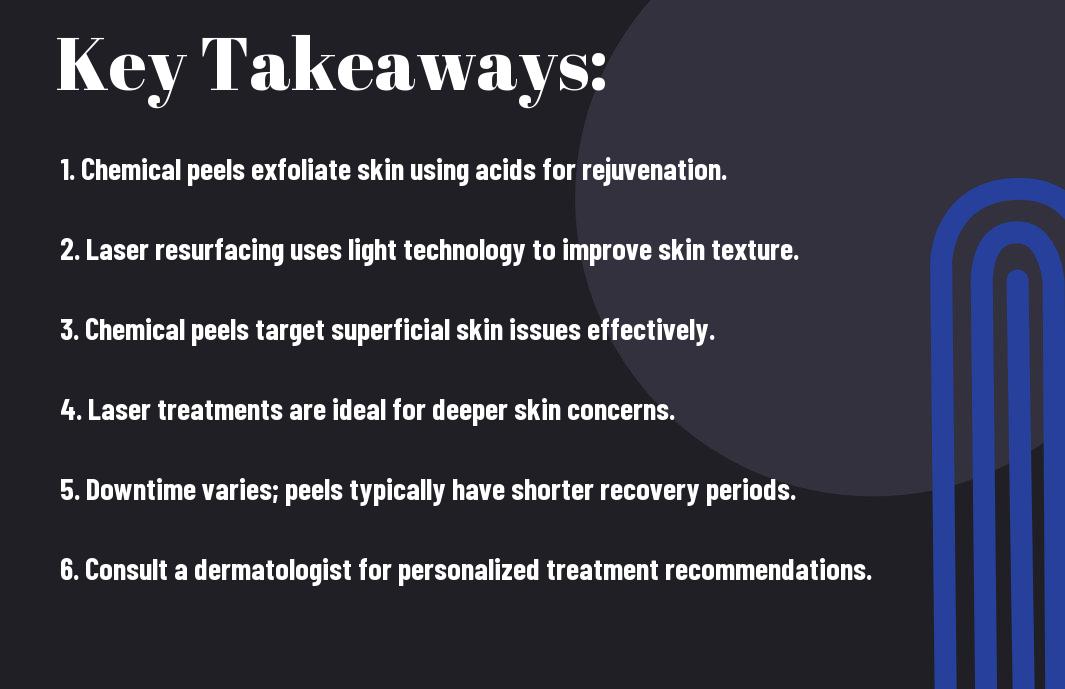
Resurfacing your skin can rejuvenate your appearance and address various skin concerns, but you may wonder which method is right for you: chemical peels or laser resurfacing? Each treatment offers unique benefits, targeting issues like fine lines, acne scars, and uneven skin tone. In this post, we will break down the differences, helping you make an informed choice tailored to your skin type and aesthetic goals. Learn about the effects, recovery time, and long-term benefits of each procedure, and gain insights to help you achieve the radiant skin you deserve.
Understanding Chemical Peels
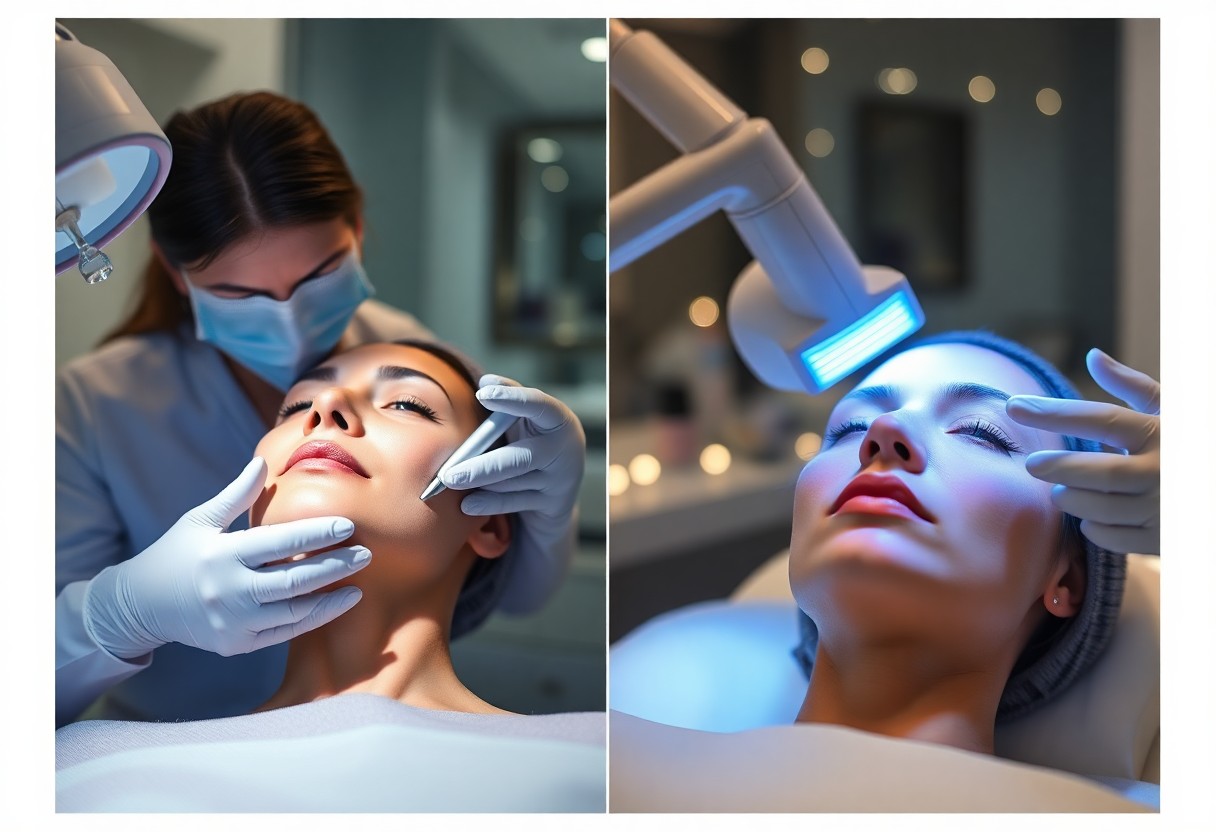
A chemical peel is a skincare treatment designed to improve the appearance of your skin by applying a solution that accelerates exfoliation. This process removes damaged outer layers, promoting cell turnover and revealing healthier skin beneath. Depending on the type of peel, you may experience varying levels of redness, peeling, and recovery time. Chemical peels can address concerns like acne scars, fine lines, and uneven skin tone.
What are Chemical Peels?
Above all, chemical peels involve the application of a chemical solution to your skin, which helps to shed the topmost layers and stimulate new skin growth. The depth of the peel can vary according to the specific ingredients and strengths used in the formulation. You may find that treatment options range from mild to deep, each catering to different skin issues and types.
Types of Chemical Peels
At the core of chemical peels are three main types, each varying in potency and application:
- Superficial Peels: Light exfoliation for fresher skin.
- Medium Peels: Treats moderate skin concerns like uneven tone.
- Deep Peels: Address severe skin issues with substantial recovery time.
| Type of Peel | Depth of Treatment |
| Superficial Peel | Light, affects only the outer layer |
| Medium Peel | Affects the outer and underlying layers |
| Deep Peel | Pentrates deeply, affecting multiple skin layers |
| Indications | Fine lines, acne, sun damage |
| Recovery Time | Minimal to extensive, varies by depth |
To further explore into the specifics of chemical peels, you should consider factors like your skin type, desired results, and recovery time. Each type of peel has distinct benefits and potential side effects:
- Superficial peels are best for exfoliating and refreshing your skin.
- Medium peels can help improve texture and pigmentation.
- Deep peels are suitable for significant skin issues that need more intensive treatment.
| Superficial Peel | Best for minor imperfections |
| Medium Peel | Addresses more visible issues |
| Deep Peel | Significant downtime but dramatic results |
| All Skin Types | General suitability for various conditions |
| Consultation Recommended | Important for optimal outcomes |
Understanding Laser Resurfacing
Clearly, laser resurfacing is a sophisticated skin treatment that utilizes focused light energy to address various skin imperfections. This procedure stimulates collagen production, enhances skin texture, and reduces signs of aging, making it a popular choice for individuals seeking rejuvenation. By targeting specific layers of skin, laser resurfacing can effectively treat wrinkles, acne scars, and pigmentation issues, offering you a more youthful appearance while improving overall skin tone.
What is Laser Resurfacing?
Along with advancements in dermatological technology, laser resurfacing has gained immense popularity as a non-invasive treatment option. This procedure involves using concentrated beams of light to remove damaged outer layers of skin, promoting the growth of newer, healthier skin underneath. It’s designed to minimize imperfections and provide results with minimal downtime compared to traditional methods.
Types of Laser Treatments
Between different laser options available, you have several effective treatments to choose from. The most common types of laser treatments include:
| Type of Laser Treatment | Description |
|---|---|
| CO2 Laser | Used for deep skin resurfacing, ideal for wrinkles and scars. |
| Erbium Laser | Milder than CO2, targets superficial skin layers. |
| Fractional Laser | Works by treating only a fraction of skin, less downtime. |
| Pulsed Dye Laser | Targets vascular lesions and redness. |
| Alexandrite Laser | Fast treatment suitable for hair removal and pigmentation. |
Laser treatments can offer a range of solutions based on your specific skin needs. Each type has its own benefits and concerns, so it’s crucial for you to consult with a qualified dermatologist to determine the best approach for your skin type and condition. Your treatment will be tailored to achieve optimal results.
- CO2 lasers provide more aggressive treatment.
- Erbium lasers have a quicker recovery.
- Fractional lasers minimize healing time.
- Pulsed dye lasers focus on vascular issues.
- Alexandrite lasers work well for lighter skin.
After identifying the right laser treatment for your goals, you can launch on a journey to restore your skin’s vibrance and clarity. Consulting with a professional will ensure the best outcome tailored to your unique needs.
Key Differences between Chemical Peels and Laser Resurfacing
Unlike chemical peels, which utilize acidic solutions to exfoliate and improve skin texture, laser resurfacing employs focused light beams to remove layers of skin. Each method targets specific skin concerns but differs fundamentally in the technology and techniques used, tailoring the experience for unique skin types and desired outcomes. Your choice will depend on your skin’s needs, sensitivity, and recovery preferences.
Depth of Treatment
Below the surface, chemical peels can range from superficial to deep, depending on the solution’s strength. In contrast, laser resurfacing allows for more precise targeting of skin layers, addressing issues at varying depths. This aspect is key when determining which treatment best suits your specific skin concerns and goals.
Recovery Time
At the end of your treatment, recovery time can vary significantly between chemical peels and laser resurfacing. Generally, chemical peels, especially superficial ones, offer quicker healing, whereas laser treatments might require a more extended recovery period due to the intensity of skin resurfacing.
Between chemical peels and laser resurfacing, the recovery experience will differ in how quickly your skin heals and the level of care you need afterward. With chemical peels, you may experience mild redness and peeling for a few days, while laser resurfacing can lead to longer downtime, with swelling, redness, and skin flaking lasting up to two weeks. It’s crucial to consider how each procedure fits into your lifestyle and the time you can allocate for recovery.
Risks and Side Effects
After undergoing either treatment, you may encounter side effects that vary in severity. While chemical peels might cause temporary redness and peeling, laser resurfacing can come with risks such as prolonged redness, scabbing, or discoloration. Understanding these potential side effects is crucial to making an informed choice for your skin.
To ensure a safe experience, you should weigh the risks associated with both treatments. Chemical peels typically present fewer risks, especially superficial ones, but may not be suitable for everyone. Laser resurfacing can offer remarkable results but comes with a higher chance of complications like scarring or infection. Consulting with a professional will help you gauge the benefits and risks specific to your skin’s condition and sensitivity.
Benefits of Chemical Peels
Many individuals find that chemical peels offer a variety of skin benefits, making them a popular option in skincare treatments. By exfoliating the outermost layers of skin, you can effectively remove dead skin cells and improve your skin’s overall appearance. The treatment can help reduce fine lines, acne scars, and sun damage, leaving you with a more radiant complexion. Additionally, chemical peels can enhance the effectiveness of your daily skincare routine by promoting better absorption of products.
Skin Texture Improvement
An important advantage of chemical peels is their ability to improve skin texture. With consistent treatments, you can experience smoother skin as rough patches and uneven areas are diminished. This leads to a more refined surface that not only looks healthier but feels softer to the touch. By encouraging collagen production, chemical peels also help enhance your skin’s elasticity, giving you a more youthful appearance.
Pigmentation Reduction
Benefits of chemical peels also extend to pigmentation reduction. If you struggle with dark spots, uneven skin tone, or hyperpigmentation, chemical peels can be an effective solution. These treatments work by promoting exfoliation and revealing fresh skin layers that are less pigmented, ultimately leading to a more uniform complexion.
The chemical solution applied during the peel penetrates the skin and targets melanin production, significantly reducing dark spots and discoloration. As you undergo multiple sessions, you may notice cumulative improvements in your skin tone. Additionally, chemical peels can help prevent future pigmentation issues, allowing you to enjoy clearer, brighter skin long-term.
Benefits of Laser Resurfacing
Not only can laser resurfacing significantly enhance your skin’s appearance, but it also promotes faster healing and recovery compared to more invasive procedures. This treatment targets specific skin concerns such as wrinkles, sun damage, and acne scars, offering long-lasting results. You’ll enjoy smoother, more radiant skin while minimizing downtime, making it a preferred choice for many seeking skin rejuvenation.
Precision and Control
Laser treatments allow for precision and control, enabling you to target specific areas of your skin without affecting the surrounding tissue. This accuracy ensures that the treatment is effective and minimizes damage to healthy skin, promoting faster recovery. You can trust that the results will be focused and tailored to your specific needs, enhancing your overall appearance.
Versatility in Treatment
One of the standout advantages of laser resurfacing is its versatility in treatment options. Whether you’re dealing with fine lines, age spots, or more severe skin blemishes, lasers can be adjusted to meet your unique skin type and needs.
Further, different laser types such as ablative and non-ablative offer tailored solutions for your concerns. Ablative lasers remove the outer layer of skin, ideal for deeper issues, while non-ablative lasers stimulate collagen production with minimal surface disruption. This variety means you can choose a treatment that best fits your skin condition and recovery preferences, providing an effective approach to achieving your desired results.
Choosing the Right Treatment for Your Skin
After evaluating your skin concerns, it’s imperative to choose a treatment that aligns with your specific needs. Chemical peels and laser resurfacing offer distinct benefits, so consider factors such as your skin type, concerns, downtime, and desired results. Your unique skin condition will play a significant role in determining which option is best for you, helping you achieve the healthiest and most radiant skin possible.
Skin Type Considerations
Treatment options vary widely depending on your skin type. For instance, if you have sensitive skin, a mild chemical peel may be more suitable in minimizing irritation, while those with oily or acne-prone skin might benefit from stronger options. Laser resurfacing could be an effective choice for deeper scars or pigmentation. Understanding your skin type will guide you in selecting the most appropriate treatment.
Consultation with a Dermatologist
For the best outcomes, consulting a dermatologist is highly beneficial in determining your ideal treatment. They can assess your skin type, concerns, and medical history to tailor a personalized approach with either chemical peels or laser resurfacing.
With a comprehensive skin evaluation, a dermatologist can provide expert insights into your skin’s specific needs. This professional guidance is invaluable, as they can recommend not only the most suitable treatment but also any preparatory steps and post-care necessary for optimal results. Additionally, they can discuss potential combinations of treatments for enhanced effects, ensuring you achieve your desired outcome safely and effectively.
Summing up
On the whole, choosing between chemical peels and laser resurfacing depends on your specific skin concerns and goals. Chemical peels effectively target superficial skin issues like fine lines and pigmentation, while laser resurfacing tackles deeper skin problems and improves overall texture. Understanding the unique benefits and potential side effects of each option is key to making an informed decision. Consult with a qualified dermatologist to assess your skin type and discuss which treatment will best suit your needs, ensuring you achieve the desired results for your skincare journey.